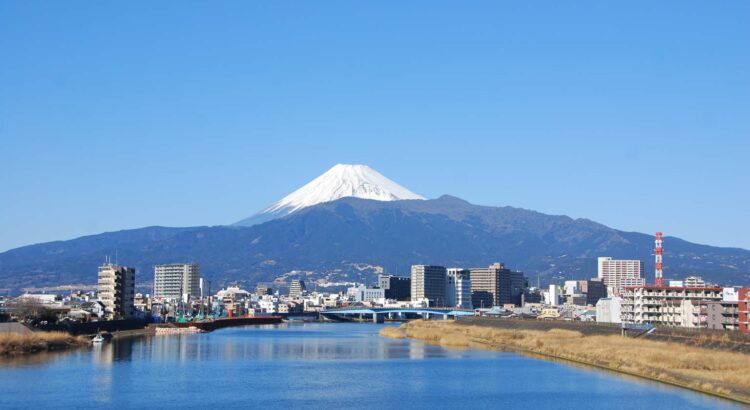
I started writing the following posts in 2020, about the summer of 2019, the beginning of spring in 2015, and two sweet years between 2005 and 2007. It’s now 2023 and I’m on a mission to write a little about Japan before the next summer adventure.
***
Work from home, chores, online school. 2020.
Though I’m mostly stuck in my flat, reminded that the time is passing by the daily pounding of pots and pans at 7,30pm, I’m not feeling too bad because the lamps in my flat illuminate all my Japanese kitsch (I use that word in the most loving way): I’m reminded of the sakura that have bloomed in March and fallen away from the tree branches like snowflakes, and I know that though the coming winter will be a difficult one, spring will come again and life will bloom again.
These posts will be my worst: I can’t write about Japan like other places; neither my words nor photos can recreate the impact that Japan has had on me. It is the one place I will always return to, not out of obligation to see friends who have become family, or because I crave the food or the feeling I get being on a train platform, but because it pulls me, like an umbilical cord that feeds and refreshes my soul. I’d say I was Japanese in a previous life, if I believed in that sort of thing.
I first arrived in Japan on a balmy and humid August afternoon in 2005, a participant in the JET Programme. I didn’t prepare: I didn’t read about Japan; I didn’t look at a map; I didn’t study any of the language, not even a single greeting. That May I had graduated from university, packed my tent and steel-toe boots, and went off to tree plant in Northern Ontario – I had no other job lined up and needed to start making money to pay off school debt. Though I had applied to the JET Programme and been through the interview process a few months prior, I had not heard back. By mid-July, tired, achy, and swollen with massive calluses on my feet and palms, back in my parents’ flat, resting after a summer of hard labour, I got the call that changed my life – someone had dropped out of JET and would I be ready to hop on a plane headed for Japan in two weeks?
Of course.
As a side-note, a few hours later EPIK, the Korean program, also called me to offer me a job. Go figure.
On August 30th, I got off the plane at Narita Airport, dressed in a blazer that was meant to make a good first impression when I first met my supervisor.
Rather than disembarking via a jet bridge, we walked off the plane and straight into the August heat. I’ve never taken a breath so heavy with water. The blazer, 100% polyester, soaked up the heat and steamed me. The heat didn’t dissipate as I waited for over an hour in a tight-knit line to get through customs and have my visa stamped.
After 2 unforgettable days in Tokyo, where we paired orientation with fun, I stepped off the train in Numazu.
I lived in Numazu, Shizuoka for the next 2 years.
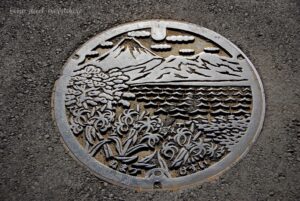
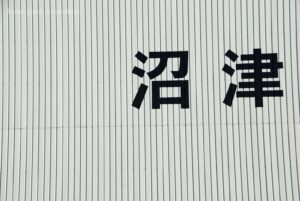
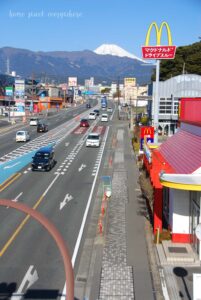

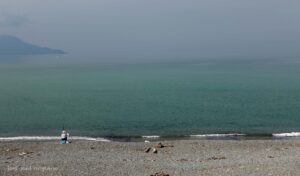
Shizuoka is home to Mt. Fuji, and I was lucky enough to see her almost everyday. Even when I didn’t see her, I knew she was hiding behind a protective layer of cloud that resembled a lady’s fascinator. I was lucky enough to live near Kadoike, a small, man-made pond, full of fish and turtles, in a Japanese style flat with real tatami-floors that always smelled sweet. In the spring, the sakura bloomed around Kadoike, and I rode my bike through the falling petals.
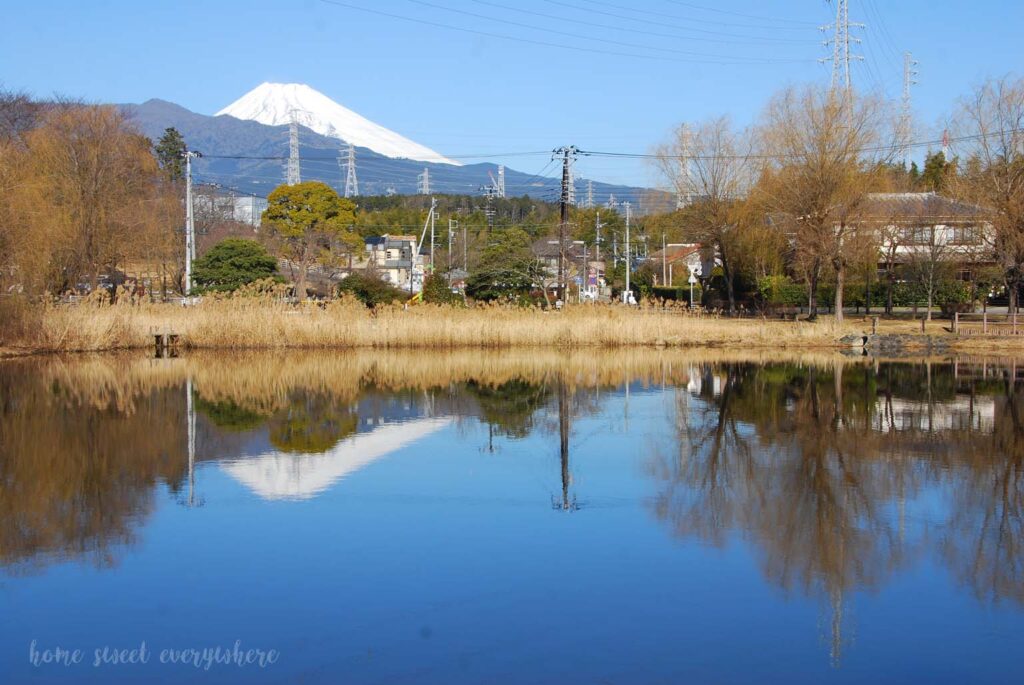
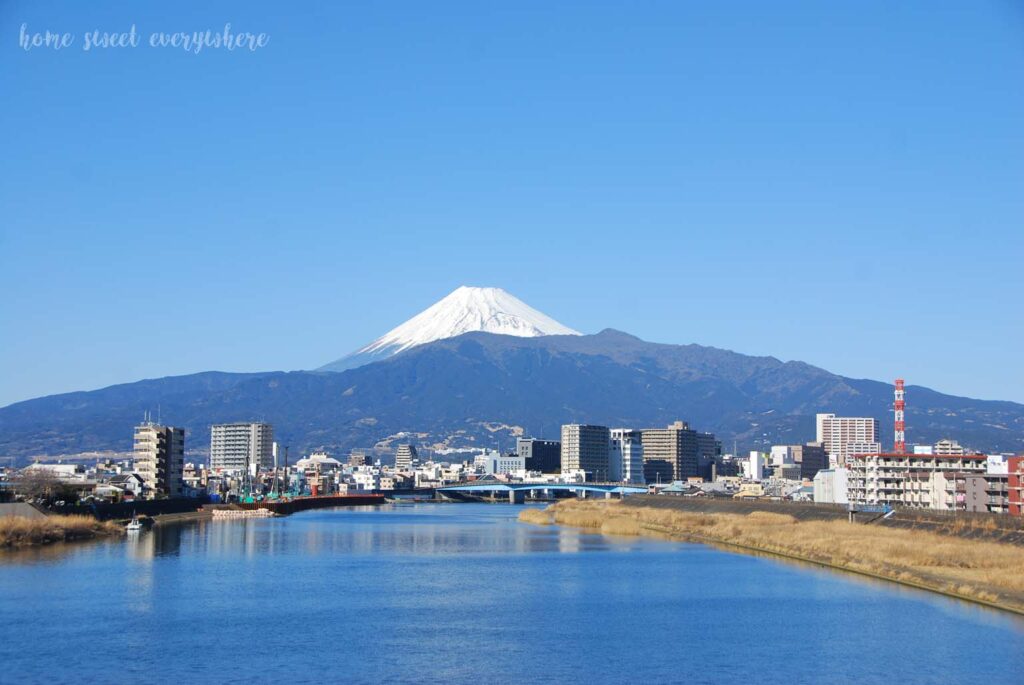
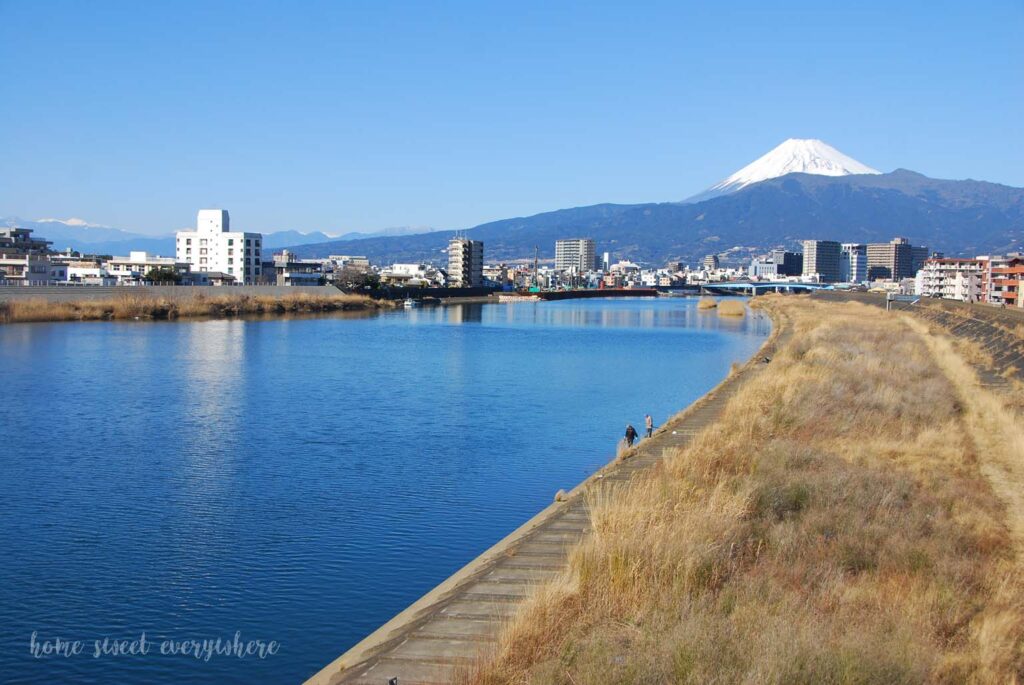
Even saying Numazu now makes me feel better on a bad day. It’s a word that’s as comforting as a hug.
I’ve been going back to Japan every 4-5 years, the most recent in the summer of 2019. I spent the month of July teaching in Vietnam and Taiwan, and since I was already half-way around the world, I headed to Japan to spend a hot and humid August there.
Unlike in 2005, this time I was prepared with a plan that was much more comprehensive than any of my usual travel plans. Everything was booked. I had a 4 week Japan Rail Pass, a small backpack with nothing much in it so that it was light and not overbearing as I walked the streets with it in the summer heat, but also small enough to easily lift onto the rafters of the trains so that in the midst of travel season, it didn’t take away precious space on the trains.
I spent the first week in Tokyo. On my first night, after I drop my bag, I visit Senso-ji Temple which is a short walk from my hostel. It feels like I’ve never left Japan. Everything comes flooding back – my mind’s map of the city, the fun I had here with my friends, even the little Japanese that I used to know but haven’t used in years, floods my brain.

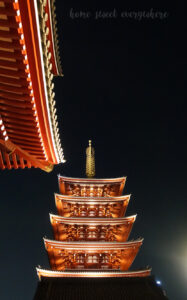
Senso-ji is best visited at night, when all the vendors have closed shop and the temple sits quietly, resting, bathed in light. A few people walk around, and once in a while a person rides by on a bike, heading home after a long day of work. I get a fortune, pray at the Shrine, walk around and breathe. I’m not religious, but when in Japan, I can’t help but feel a connection to the Earth, nature and the energy that I ardently sense everywhere, whether I’m the city, or the mountains. Japan is energy. I don’t get this feeling anywhere else. Even though I’m a foreigner here, and for two years I carried an Alien Registration Card, I don’t feel like a foreigner. I feel like I am home.
Though it’s my first night here and I’m excited, and I’m sleeping in a tiny cube, it’s easy to fall asleep. In Japan, I rarely have trouble sleeping. I wonder if it’s because I’m always so close to a big body of water, and never far from the mountains, even though at the moment I’m in one of the world’s largest metropolises. That’s the problem with where I live now: it’s not really a metropolis like Tokyo is. It’s a long road lined with skyscrapers, surrounded by a sprawl of suburbs: though I’m near a big body of water it is quite a drive, and a boring one at that, to get to a place where the earth rises a bit.
***
Back in 2005, I spent my first night in Japan in Shinjuku, Tokyo – it’s where our JET orientation took place, before we were let out into the wonder of the city. A few new JET acquaintances and I wandered around town. The lights, the people, the alleyways that do not follow the grid system, all astounded my senses. I felt like Alice in Wonderland, shrank under the lights, the noise, and the crowds, ready to follow any white rabbit that might appear. During the early hours of the morning, my group followed a young Japanese man down an alley, up 2 flights of narrow and brightly lit stairs, and into a karaoke room. We ordered wine, beer and munchies, and sang. I did not intend to sing, but the wine made me bold. I have photographs of myself holding a microphone, mouth open, head tilted back, but the actual memory is more fuzzy than the photo.
Everything else about my first two weeks in Japan is clear. I ride the Shinkansen to Numazu, and wonder at how smooth and fast the train is, and how quiet, how clean, and how well-mannered everyone on board is. In Numazu, my teacher-supervisor takes me on a whirl-wind tour of my school, where I meet my Kocho-Sensei, Kyoto-Sensei, English teachers, and some random students who happen to be in the school during the summer break; I get a quick tour of my flat, followed by a walk around the park; I’m shown my nearest grocery shop; finally, I’m introduced to the bicycle that the previous JET left behind – she’s a maroon, single speed jitensha: I name her Hermione. After the tour, I’m left alone outside my 3 story apartment building. I climb the stairs, where several big, hairy spiders have come out to greet me. In my new home, I leave my shoes in the genkan, step over to one of the tatami rooms that has a 3 foot long, red sofa, lie down and fall asleep. It’s only 5 pm. I awake at 3 am, my head on the sofa, my body on the soft tatami, and the sun is already beginning to rise.

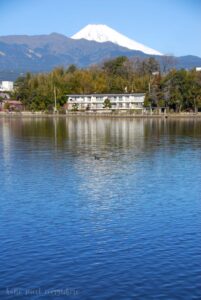
I have little time to adjust to my new life. Though it’s 3 am, I wake up running, exploring my tatami rooms and sliding doors to change the configuration of the apartment; I rest on the balcony, taking in the view; I search my kitchen drawers, making lists of items I’ll need. Finally, I choose my first school outfit, not forgetting to pack my indoor school slippers, and at 7,30 I’m off to school.
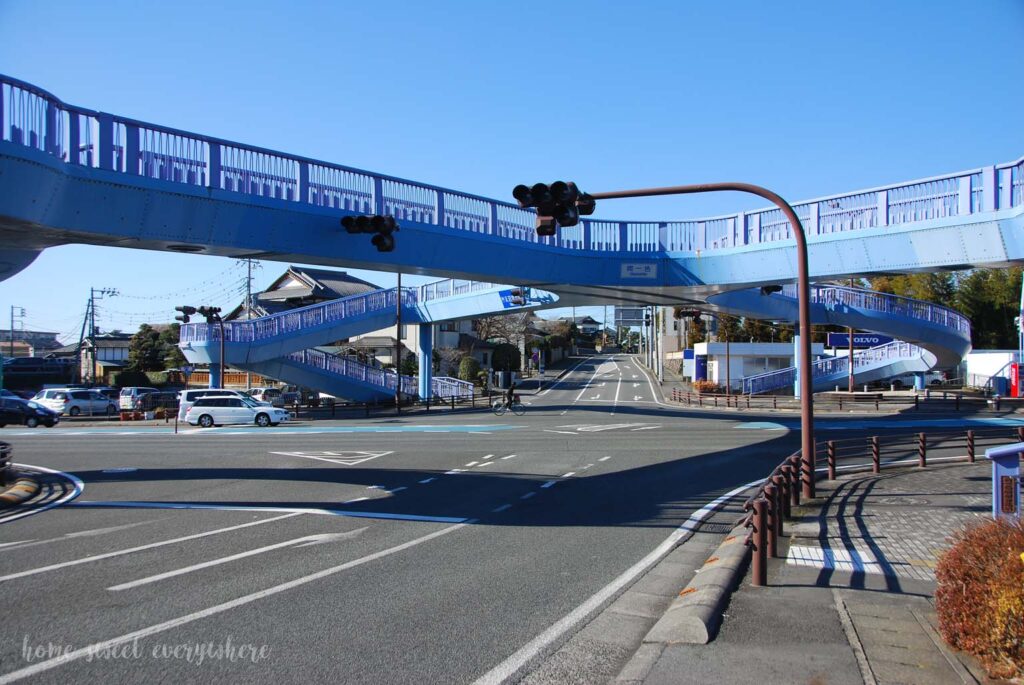
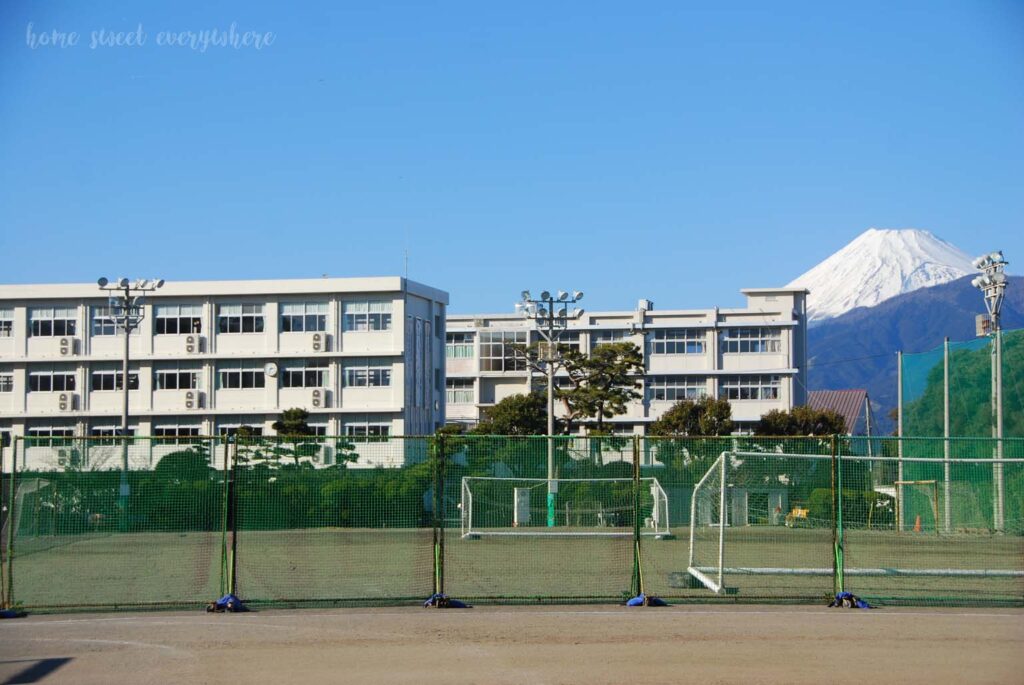
School’s only a 10 minute walk away, and I arrive early…and sweaty. It is summer, and the teacher’s room, shared by all teachers in the school, is half empty because many teachers have taken their holiday leave (it is also the only room in the school that is air conditioned – I soon learn to carry a little towel around to class with me, to wipe the ever-present sweat beads that form above my upper lip.) For students, the school year starts in 2 days, and I have a lot of learning to do before I start.
I’m panicked, tired, overwhelmed and excited. I have no expectations, which is kind of amazing – it may be that I am not my usual anxious self because there is too much to take in, and for once the excitement is more powerful than the anxiety. I’m briefly introduced to the few teachers whose desks are in my row, along with the Tako-san, who works in the reprographics office (and ends up being my valued friend and teacher of Japanese with whom I am still in touch), then I set to exploring all the books that are on my desk, left by my many predecessors – the books have masses of activities on how to teach English as a second language.
I’ve never taught before. I have no teacher-training. I’ve never stood in front of 42 students and commanded their attention. But, I know that a lesson has three parts, and I set to work.
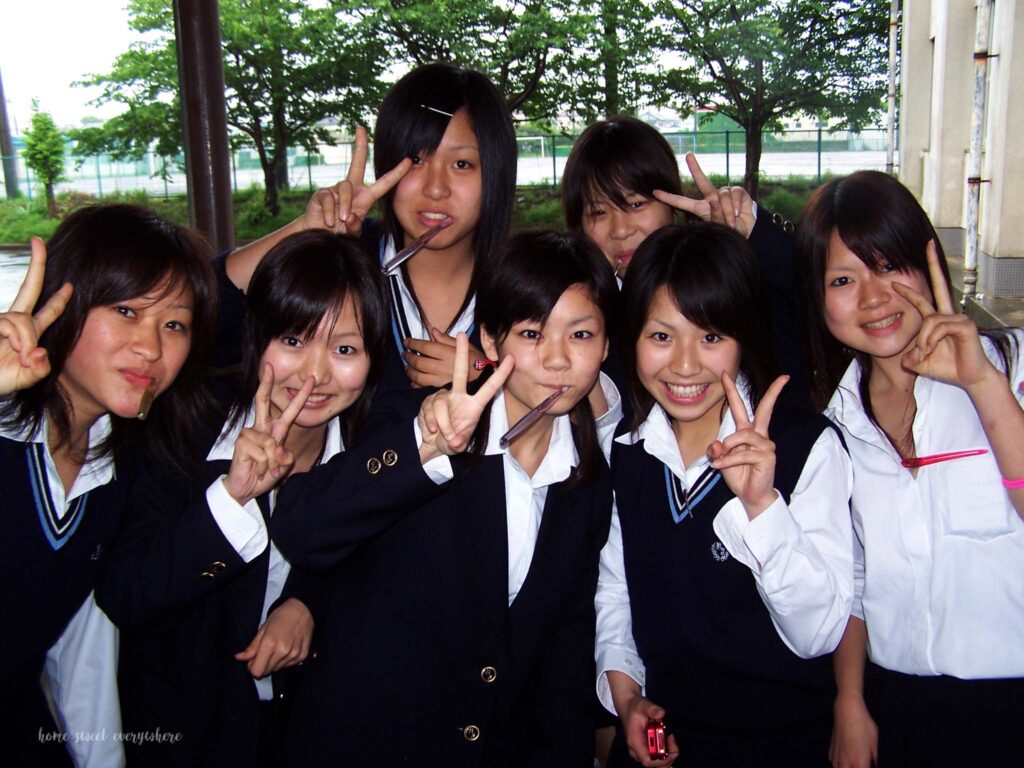
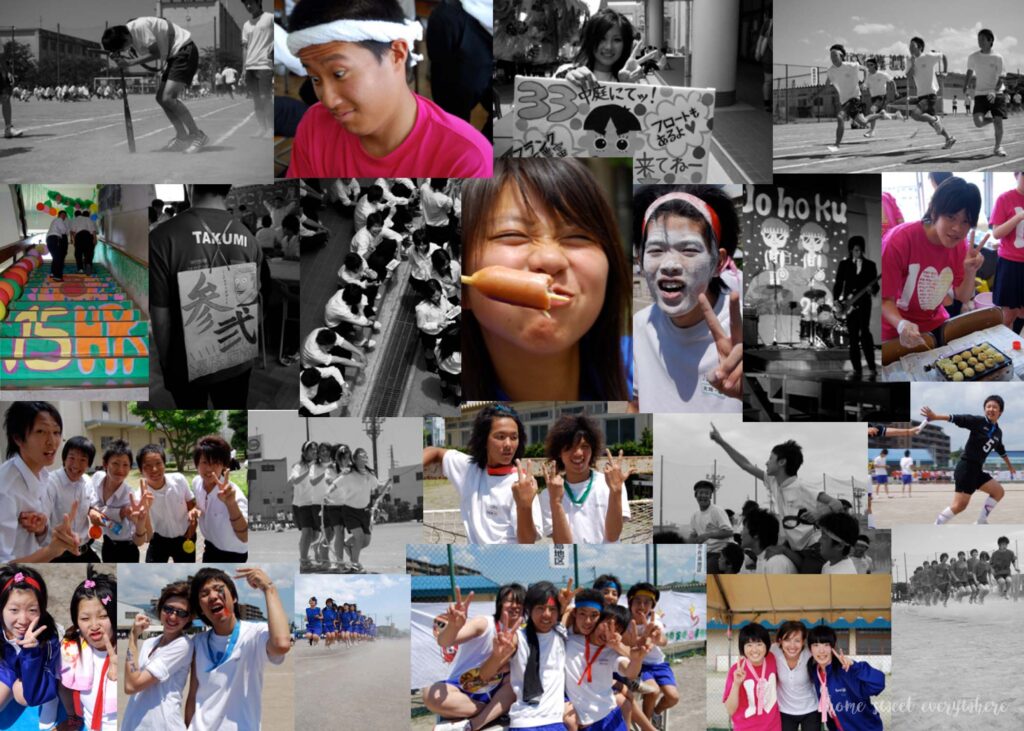
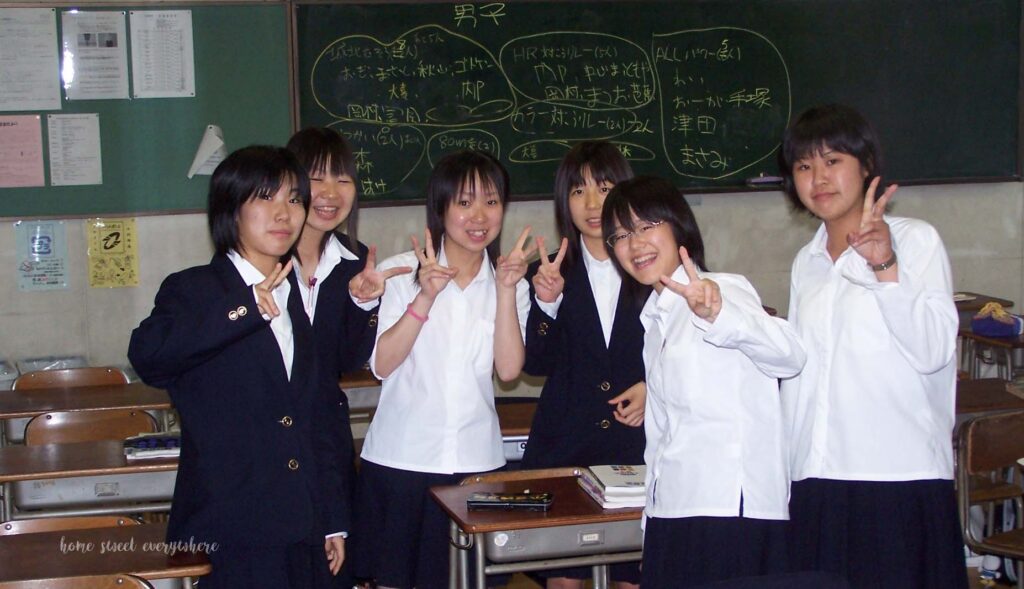
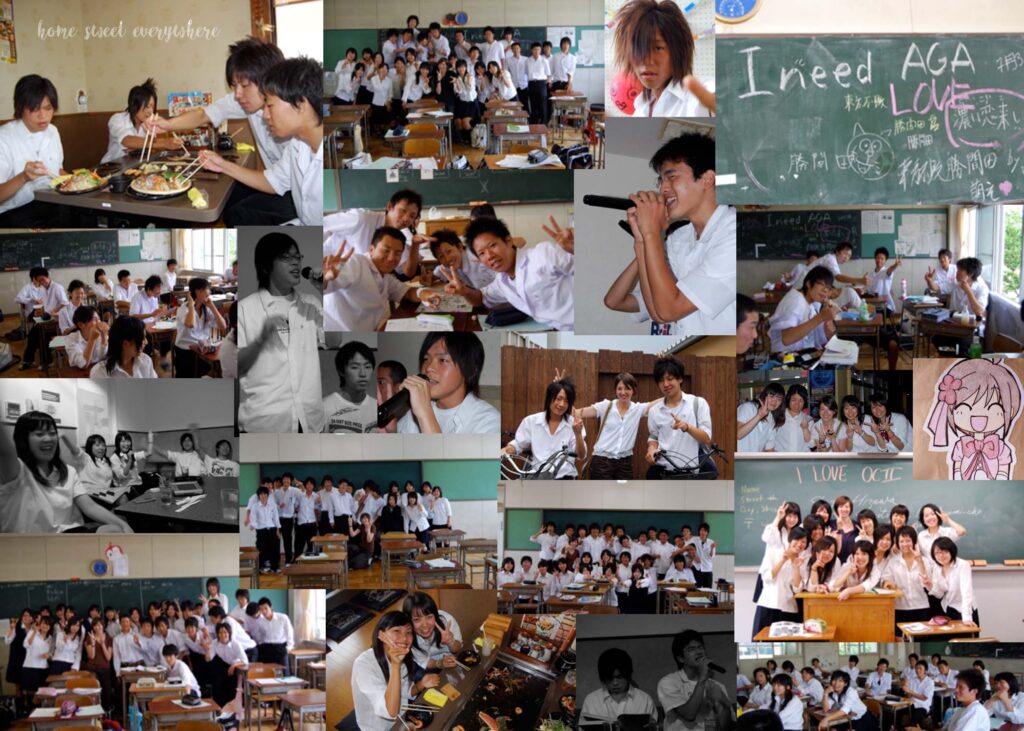
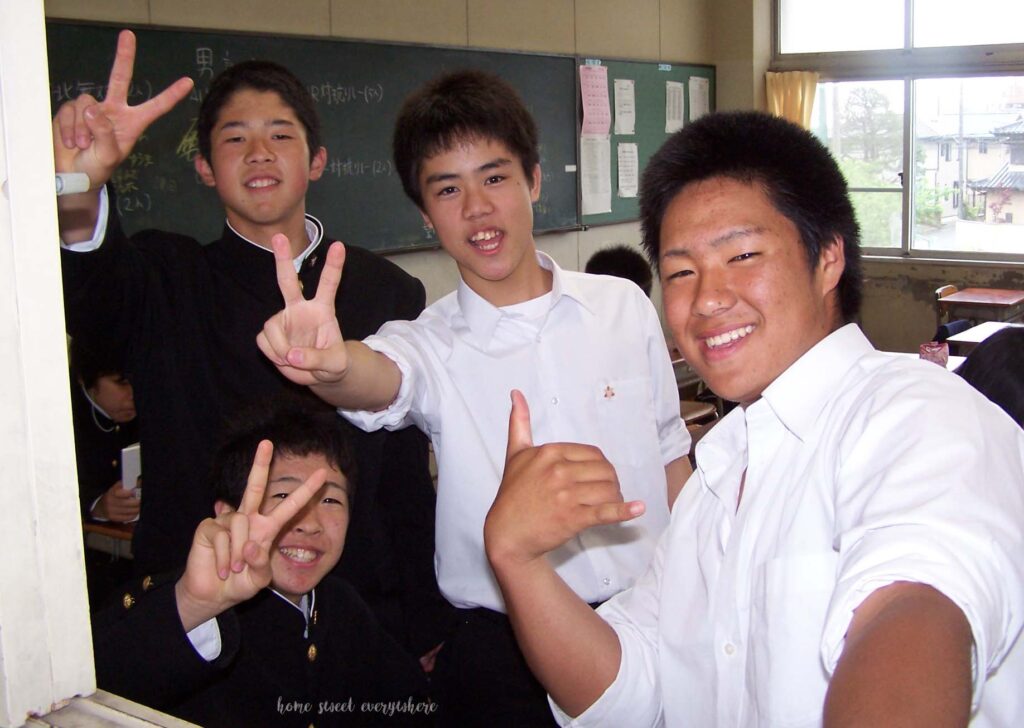
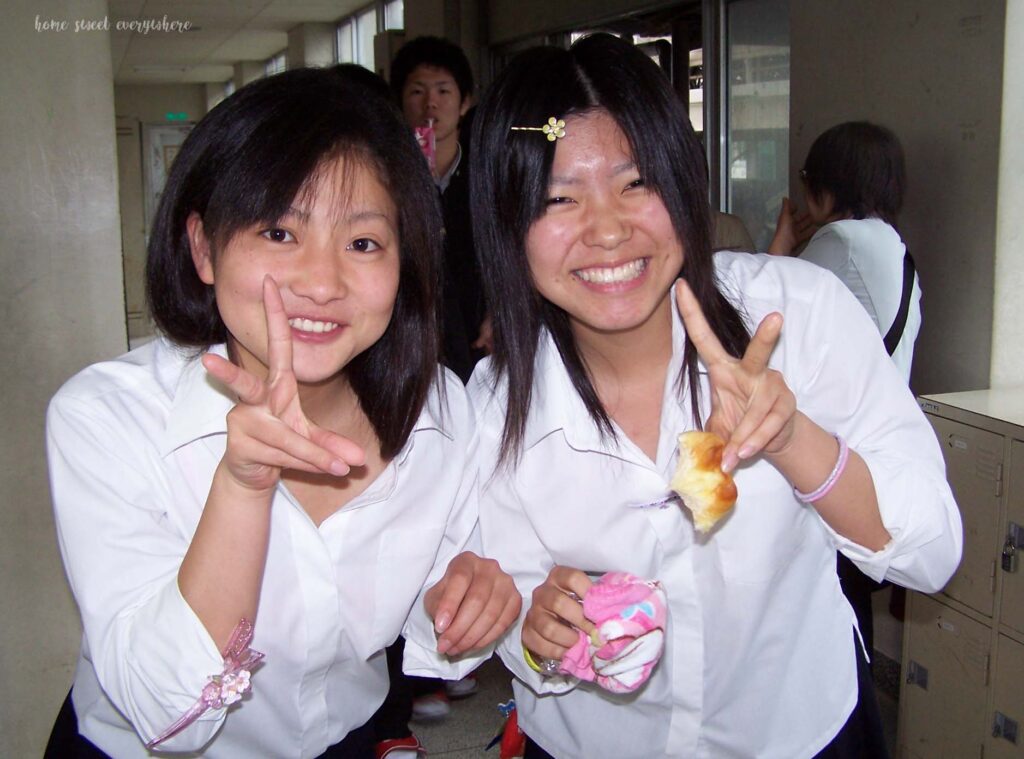
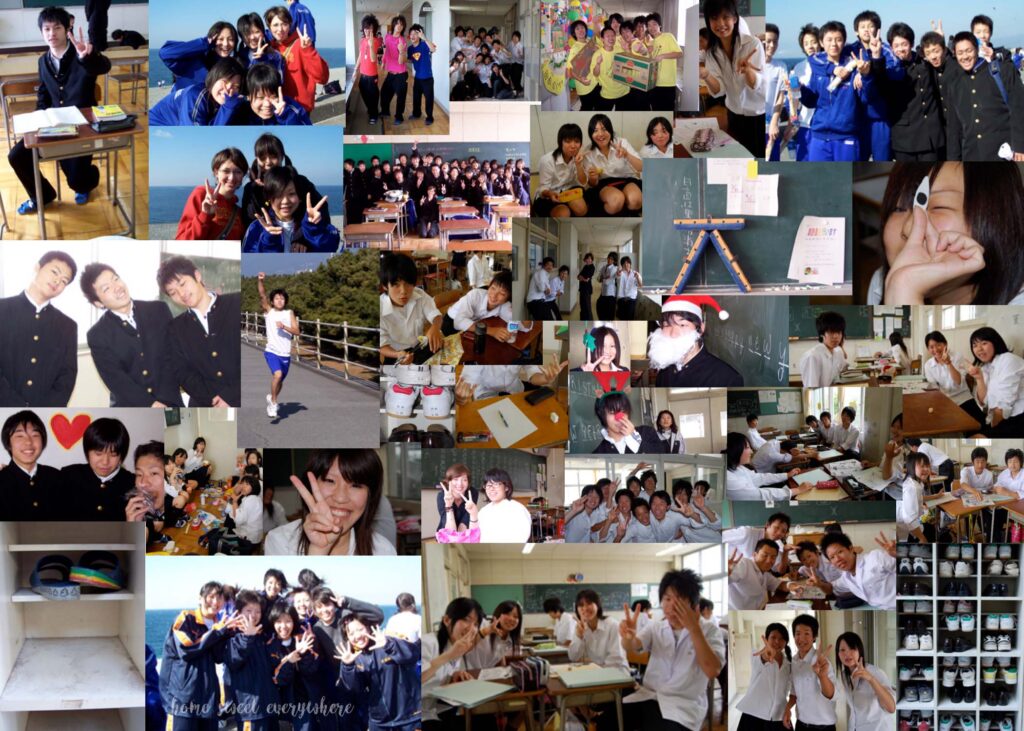
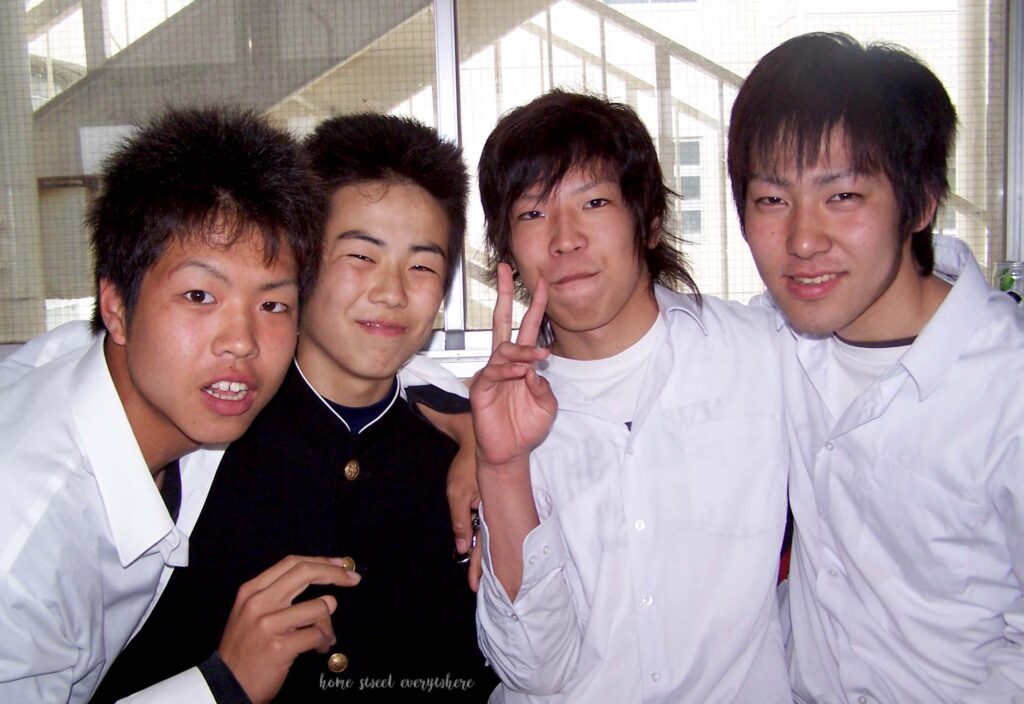
The first weeks are difficult. The jet lag hurts, the heat burns, and standing up on the classroom platform, in front of 40 Japanese students, with their grammar teacher in the back of the class supervising, is alarming. After my very first lesson, my one and only comment for improvement from my supervisor is, “Your voice is like a mouse.” Everyone is polite about all of my blunders in the first weeks, but I do get better, and I do find my place.
And, I fall in love with everything.
I stay for two years.
My one regret is that I didn’t stay longer; that I didn’t, perhaps, stay forever.
***
Now, when I return to Japan, my first stop is always Numazu. I’m still in touch with a few of the colleagues that used to work with me. This time, they all meet me at an izakaya. Back in the school office we were all demure, composed, professional; at these gatherings we laugh and drink and exchange funny stories about our lives.
On this trip I also get the rare occasion to visit one of the students that I used to teach. She’s now in her early 30s, a nurse, married and a mother. It’s surreal – she is seemingly the only evidence that time also moved in Japan, because everything else seems to have stayed the same.
My friends also take me to a Cat Festival: in Japan, there is a festivity to celebrate everything, and everything is approached with the perfect balance of serious and fun. (I remember the festival well, even though I can’t find my photos from that day.) It’s the perfect welcome back to Japan.