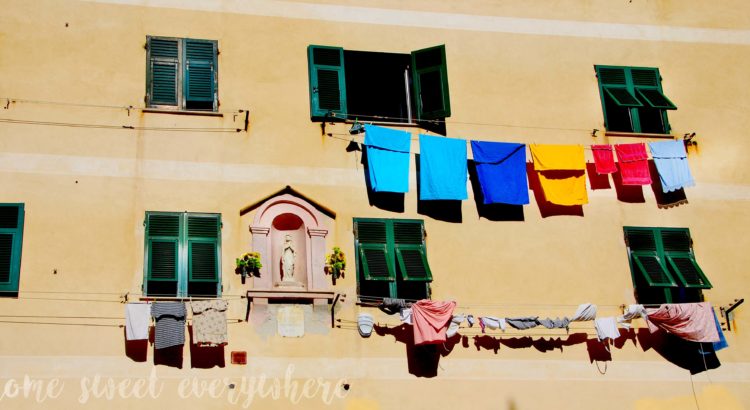
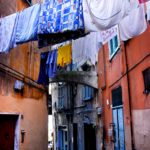
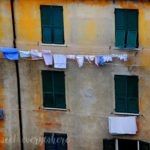
I love cities where laundry hangs from the windows, or is neatly folded over sagging lines across alleyways. It’s a living city. Full of real people. It’s not made pretty for tourists although I think drying laundry is the prettiest sight.
Hanging laundry is one of the first sights I get in the city, so I instantly fall in love with Genoa.
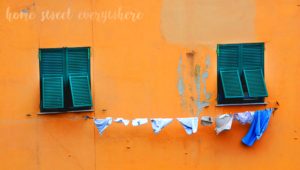
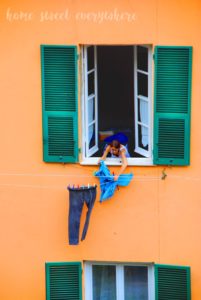
(In English, it’s Genova. In Italian, it’s Genoa.)
Though it is late July and the height of summer tourist season, the city is full of Italians. I see a few tourists, but they don’t travel in groups; tourists flock to Rome and Florence, leaving this city to me.
Ok, so I didn’t know about Genoa before I saw that it was much cheaper to buy a ticket here than to Rome, but I’m so glad I was looking for a deal which brought me here, a beautiful, vibrant Italian city that’s full of life, cafes and dark alleyways just like Florence or Verona; a city that’s as beautiful though not as big as Rome; a city that’s just as romantic, colourful and free as the Italy of my dreams.
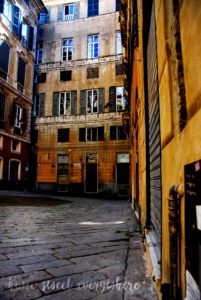
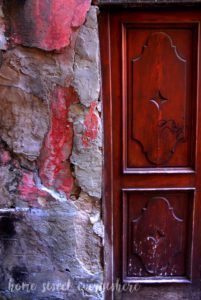
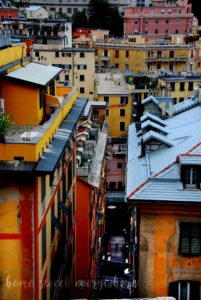
On my first full day, I’m out of the hostel just past 7 in the morning. I think I may see the city wake up and wander the alleyways before it gets too hot.
Wrong.
The city is wide awake. Perhaps it never really went to sleep.
Already, people are crowding around the bar and drinking their caffès; a few people sip their cappuccinos, tips of their newspapers perched on the tips of small round tables. The patios are nearly full, with groups of friends drinking, smoking and chatting.
Mornings are energetic. Cheerful. Groggy and sluggish aren’t words that come to mind when I think of an Italian morning. I love it, because I love mornings and am happy to see others do too.
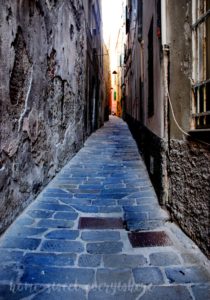
On a free walking tour operated by the lively Spyros, I spend more than three hours roaming the city, winding in and out of alleyways, and perching on church steps to listen to Genoa’s story. The most interesting thing I learn is that the core of the downtown is a proper melting pot, where the city’s poor live and mingle with the city’s rich. Rather than living in different neighbourhoods, the poorer folk live on the bottom floors, while the rich get to climb the steps to the 3rd or 4th floor. Genoa is a collection, organized mish-mash of everything: a church is connected to a fancy tennis club; the poorly lit alleyways are sometimes lined with sex workers, but that’s also where I find cozy gelato shops, dingy convenience stories, and a fine view of City Hall.
Spyros introduces his walkers to local shops serving fresh focaccia, farinata (an Italian chickpea pancake made only with chickpea flour, water and olive oil), gelato and caffè. All but the gelato cost €1 each; a generous 2 scoops of gelato costs €2 – one scoop isn’t even on the menu!
Needless to say, I spend the rest of my days in Genoa snacking, never hungry enough in the heat and the excitement for a proper meal.
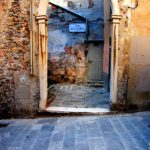
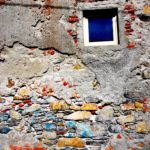
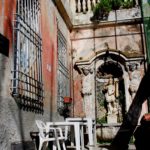
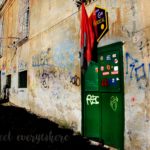
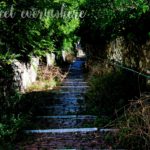
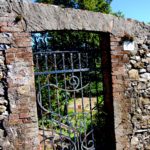
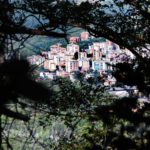
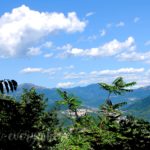
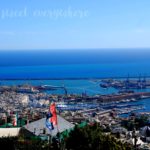
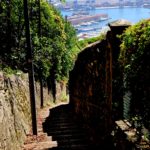
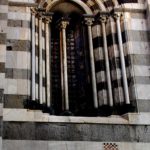
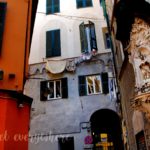
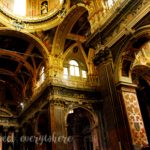
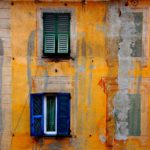
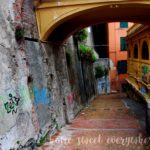
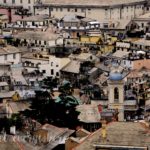
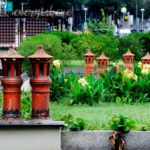
I make my way up the funicular to the northern part of town, get lost, and find Salita Superiore de Simone, an often narrow and overgrown alley that leads down and back into the city. I see no other person as I make my way down the steps, the views of the city and Genoa’s harbour in front of me, until I too an standing on the harbour front. The harbor isn’t that pretty, but it is impressive to see the hundreds of stacks of shipping containers on a container ship – this is an industrial, working harbour.
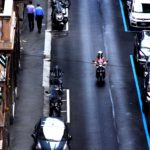
I walk along the main streets, and meander off into the narrow arteries. I find markets, more foccacia and beautiful boutiques. I may be wrong, but are men’s shoes more prominent than women’s in window displays?
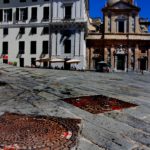
Every good city has a good place to sit and relax, away enough from the crowds to get a break, but not so far that you can’t see them. In Genoa the plaza De La Ferrari is the main square, with, of course, a fountain, and stairs leading to a museum which are perfect for a rest. On the way to the stairs, a light tickle of spray from the fountain is all I need to feel refreshed.
As the sun set, more people emerge. The city lights turn on, illuminating everything in a golden glow. Musicians set up in the squares. Groups of friends gather in the square, sit church steps, perch on street curbs and laugh. The air is still but pleasant; it freezes the pleasant scene as in a tableaux.
At dusk it’s time to inhale the city. It’s time to put away my phone, my camera. Stop. Listen. Look. Inhale.
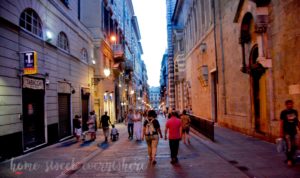
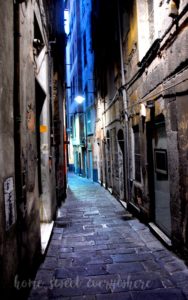
My feet are tired, I am post a pistachio and zionati Gelato so the sugar keeps me going, but my feet are throbbing, swollen from the heat and the walking, and it being only early evening, I stop in for an aperitif. I happen to be in Piazza Sarzano, near Caffè Boast and there is one free table that calls my name.
The waiter suggests a local wine and since it’s aperitif, my wine arrives with snacks, 5 plates of them including bruschetta, carrots with dip, crisps, salsa and olives. At the moment, it’s the white wine that will make my feet lighter, but the snacks are more than welcome. There are so many snacks, in fact, that I need another glass of wine. Another recommendation from the waiter. Another local wine. Both are delicious. Crips. Light. Refreshing.
At 22,00 the city is more alive than it is during the day. It invites me to roam and take breaks for wine, for gelato, and simply sitting and listening to laughter and music.
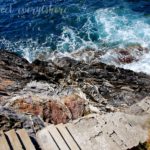
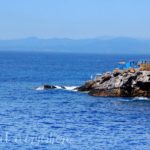
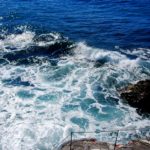
Before I leave Genoa I stop off at it’s last stop, Genoa Nervi. Though it has just gone 8 am and the sun hasn’t yet hit the shores, sunbathers are already out to claim their spot on whatever piece of rock is flat enough to have them. The coast is rocky and jagged, but some designated swimming areas have been marked off, etched into the rocks. Sun umbrellas and deck chairs are ready for hire.
The cicadas chirp rhythmically, along with the crashing waves, and in tune to my step.
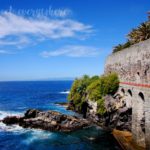
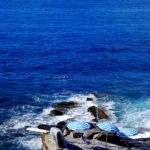
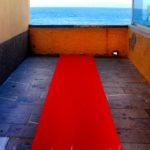
By 10am people stroll along the promenade which sticks to the rocky coastal edge. For some occasion, it’s been carpeted in red. The main street is still waking up, but two cafes are open though it doesn’t look like it until you walk by, notice an opened door and bother to look inside to realize that it is in fact a public place to buy a caffè.
Wind in my hair, caffee in my stomach, I’m ready to walk back towards the station to catch my train for to the Cinque Terre region, though I am sad to leave Genoa.
Come to Genoa, but don’t come for the day. The city requires some of your time; it requires that you meander, sit on curbs and steps, drink caffè, and eat focaccia. You won’t get the feel of the place if you come for a day. Come for a little while. Relax. Don’t rush. Turn whenever you see something of interest down an ally and don’t worry that it looks dingy and scary and dark. Be smart. Keep your belongings to a minimum and close to your body. Be free. Enjoy.
Ciao Ava,
I am Barbara La Sala, a childhood friend of Camille Marchetta. We attended the same grammar school,and were besties. Graciously Camille sent me your outstanding photos of Genoa, the home town of my maternal,ancestors. I have visited ZENA ( the,Genovese dialect word for the city endless times. You truly are a stellar phoyographer,and an excellent travel writer. Your photos and comments have captured the heart and pulse beat of one of my favorite Italian cities. Brava.
Dear Barbara,
Thank you so much. I’m glad that you enjoyed the post and the photos! When Camille told me she’s sending the post to you I wondered what you’d think. Genoa, Zena as you call it, is wonderful. I eagerly await the time that I can go back there and stroll its alleys.