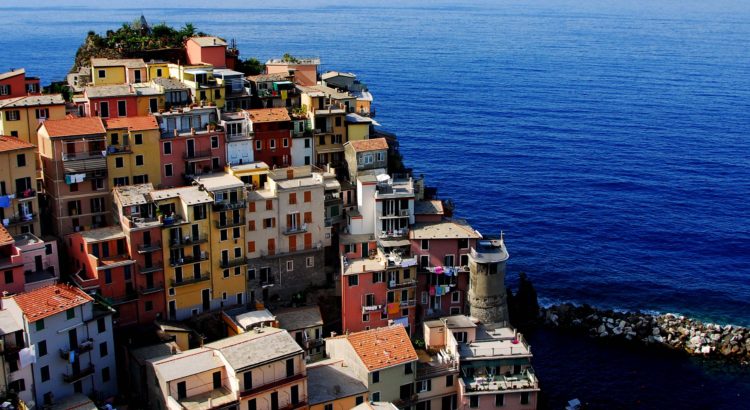
Riomaggiore
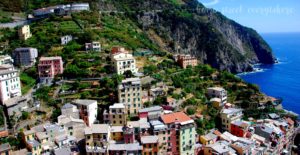
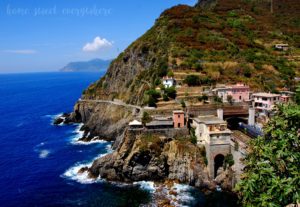
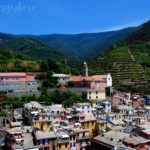
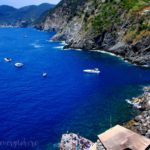
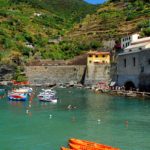
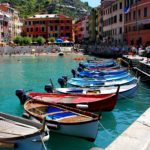
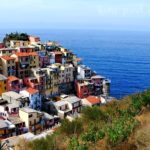
It’s the middle of July, and hot. Italy is experiencing a heat wave, but when I get off at the Riomaggiore train station I don’t notice. There are other things to take note of: the village’s harbour, the sea, and the splash of colour that stands against the green of the surrounding Parco Nazionale delle Cinque Terre.
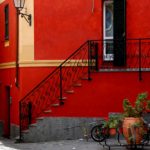
There’s a road that leads from the harbour to the sea, but that’s closed to traffic bar the morning rush when food and rubbish vans arrive, though the road does little to help the delivery men who expertly haul many of the goods up the stairs, their muscles glistening with sweat, to shops and restaurants not on the main drag.
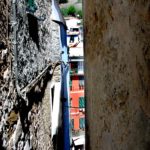
Exploring is done via alleyways, and up and down stairs many of which are, thankfully, tucked into the shade. There are plenty of gelato stalls and cafes to where body temperature is easily restored to normal.
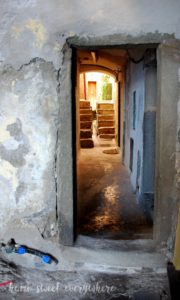
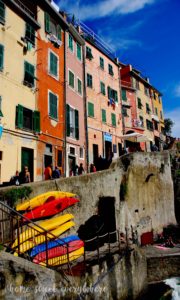
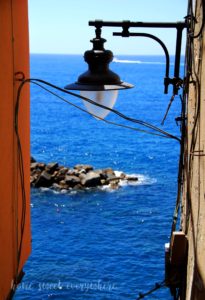
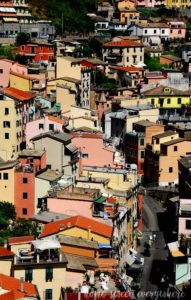
The day is long, but it zips by quickly and quietly as I meander and zig-zag my way around the village, up and down stairs, under archways, across alleyways, around the Castello, through trodden garden trails and along the coastal path. When needed, the sea provides the necessary refreshment.
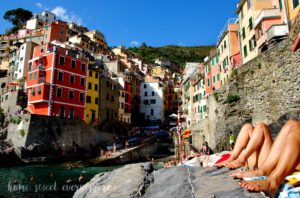
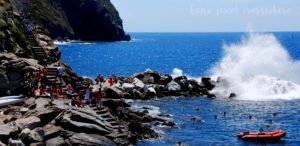
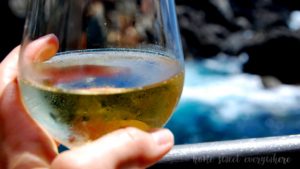
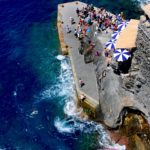
When the sun is it’s hottest, I take a break at Piè de Mà. Riomaggiore is photogenic, but I can’t take a photo of this moment. I’m sitting under the shade, sipping a dry white wine from Riomaggiore, my feet are perched on the railing beyond which is a steep drop to the sea. The sound of the sea is soft as it laps against the jagged coast; slow Italian pop softly plays on the patio. It’s hot, but the shade and wine keep me cool. It’s peaceful, but not altogether calm. It’s the perfect moment, and though I try to digitally capture it, I can’t. Sitting, sipping and listening is time better spent anyhow: I tuck the camera away.
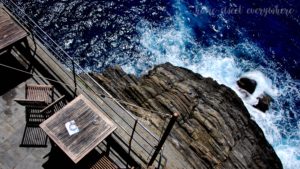
At sunset, everything slows down. People relax. Even the breeze disappears for a little while.
I eat a dish of zesty pesto served with homemade pasta and green beans at Ripa del Sole and sip on local white wine. I didn’t reserve a table, so I’m not out on the patio – even so, it’s wonderful.
Every city has a good place to hide. In Genova it’s the Plaza De La Ferrari, where one can hide in the wide open space of the plaza, the melting pot of tourists and locals that on the expanse of stairs and ledges near the fountain. In Riomaggiore the best hiding spot is the bench on the east side of the Castella. The path here leads to a dead end, so people don’t tend to wander this way, yet the path overlooks the village and far out to the sea. In the afternoon the bench sits in the shade, so it’s cool; it’s empty, lonely even, waiting for someone to warm it. The sky is still mauve, the sea is calm, and all the lights in the village light up. Children finally come out to play now that they can be boisterous and active without the sun’s rays tampering with their excitement.
Manarola
Riomaggiore is my base, but I’m eager to see the other villages before other tourists get there: I’m on the early train out to Manarola – I would have walked, but the trail is closed for repairs.
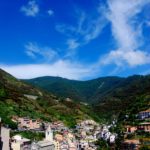
By the time I arrive in Manarola, the sun hasn’t yet risen above the cliff to expose the city to its heat, so it’s pleasant to experience the waking village. The roosters are coca-doodling their doos and the waves are calmly greeting the rocky shore.
This early in the morning the street is open to cars, and deliveries are being made. Many of the restaurants sit on on the main road, and for the ones that aren’t, goods are placed on trolleys and manually pushed along curvey cobbled alleyways and then pulled, step by step, up and up, to places where the sun is already shining. I see these strong men, first with one load, then another, making this difficult task look easy.
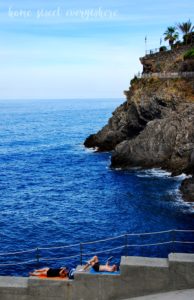
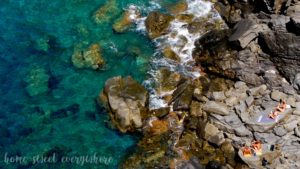
Sunbathers are claiming their spots on comfortable surfaces of flat rock, ready for when the sun finally peeks through to say good morning.
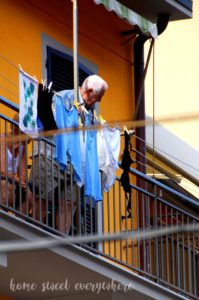
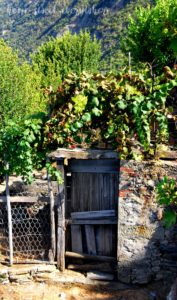
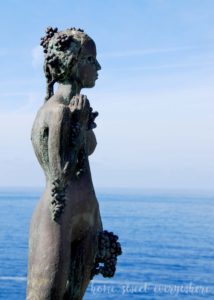
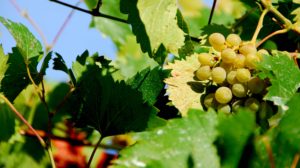
I find a coastal-walk sign, and followit. It leads to a barricade, but I veer off onto a dirt path and find myself climbing high above the city, into the vineyards where grapes diligently grow. The cool leaves provide some shade. Everything smells fresh, green, rich.
By the time I’m done walking around Manarola, the sweat has worked its way through the back of my shirt, and the sunbeams have left their mark on the back of my neck. I’m a little late putting the suncream on…
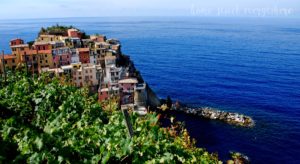
Corniglia
When I get off the train, some people file out of the station and into a shuttle that takes them up the steep slope into the village; most of the tourists, perhaps because we do not know any better, walk out of the station, turn right and walk along the path that brings us to a set of stairs.
There are so many flights of stairs that I can’t see the end of them, and everytime I come to a turn, I hope it is the last flight.
For a long time it isn’t.
Some children attempt to count, but they give up, sapping for air, begging for water. A Google search gives me the answer – there are 32 flights with 382 stairs; perhaps it isn’t a lot, but the sun makes the climb laborious. Thankfully, the entrance to the village is lined with gelato stalls and I buy a scoop of lemon and basil sorbet. It quickly dries the sweat beads that brim the edge of my upper lip. The sour ice surges through my body and escapes through the tips of my ears, leaving me alert, numb from the sourness and fresh from the basil.
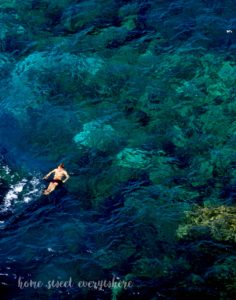
I get the second wind I need to climb more stairs, including the ones that take me down to the rocky coast, on the opposite side of the village’s train station – no shuttle bus here, but this time the stairs are mostly in the shade, with benches to rest on, along with a view of the coast that makes me forget that I’ll have to climb back up later. Many people, in fact, remember and don’t make it all the way down to the sea’s edge.
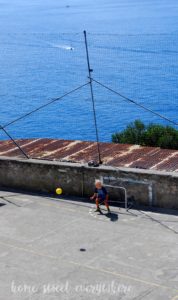
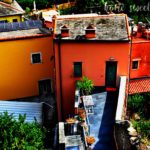
In the village, alleyways twist and turn. Boys play football on a concrete field. Tourists sip on cold drinks while locals sit on shady, cool steps and happily chat to other vendors. Wandering in the alleyways, I hear chatter coming from the open windows above. Many televisions are on, and I assume are people are tuning in for their daily hit of a telenovela. I hear people sneezing, washing dishes, laughing, tinkering in their kitchens. I hear the routines of daily life. I don’t hear tourists.
Vernazza & Monterosso al Mare
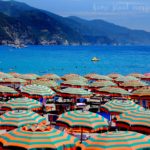
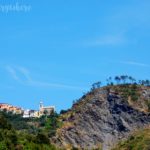
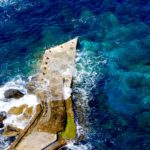
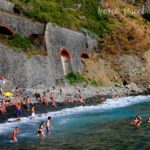
Vernazza and Monterosso are the liveliest of the five villages. It’s gone past noon, and people who have lost the battle against the strong sun and the uphill walks are taking kips on benches which are blanketed by shade. I choose to take my rest at a piazza cafe, ordering deliciously refreshing alcoholic beverages before I walk out to Monterosso’s coast and stretch out on a flat rock where I laze for the rest of the afternoon, my feet in the sea. The occasional sprinkle from a crashing wave keeps me cool while I doze.

La Spezia
Before I leave the region of Liguria and hop on a train to Rome, I stop for a walk in La Spezia.
Friday is market day. The first stall I see has 4€ written over several racks of clothes and without trying I find a breezy white top I like.
The market is busy; I keep bag snug under my arm and forge on. It is great for people watching, especially if you get here before 10 am when the locals are the only ones rummaging through the piles of clothes, shoes and other knick-knacks, bartering for cheaper prices.
The focaccia is lovely. I have one with asparagus, another one with artichokes, and though I am full, I can’t resist going back into the bakery to buy another with aubergine, potatoes and olives.