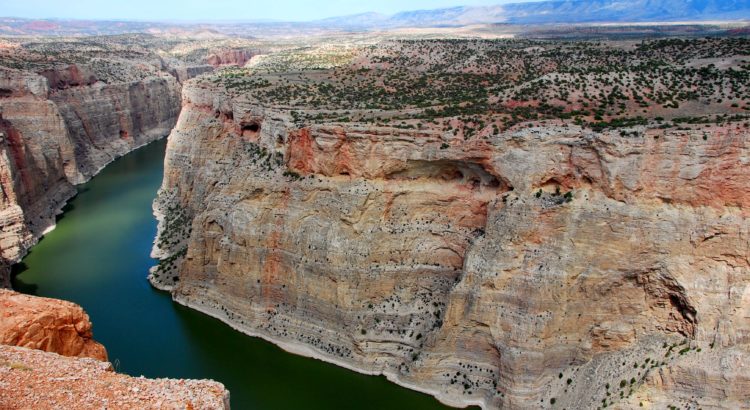
On my way east I take route 14 (Alt) and stop in the little town to stock up on some fresh fruit and beer – just the necessities – and as I drive out of the town I notice a sign for a Visitor Centre for the Bighorn Canyon Recreation Area. I stop in. The place is quiet, bar a family who are occupying some of the comfy looking sofas. I wander around the displays, stop in front of a TV that plays scenes of the Rec Area taken from a helicopter. Looks cool. The park ranger hands me a map and tells me that its worth visiting – there is a wilderness refuge area for Wild Mustang, a scenic drive, relic ranches and camping. Sold.
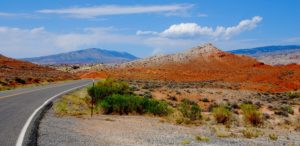
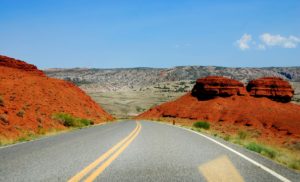
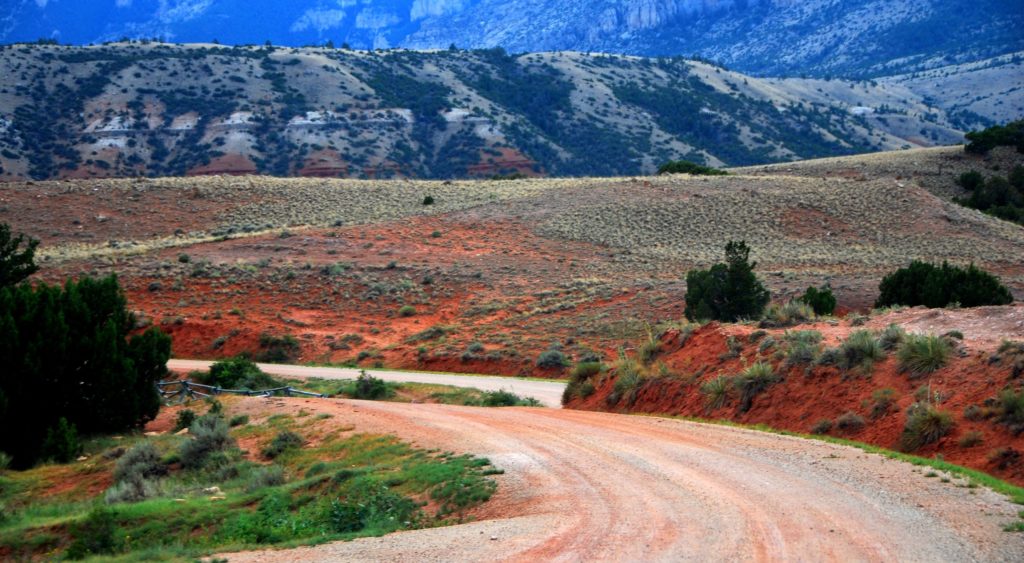
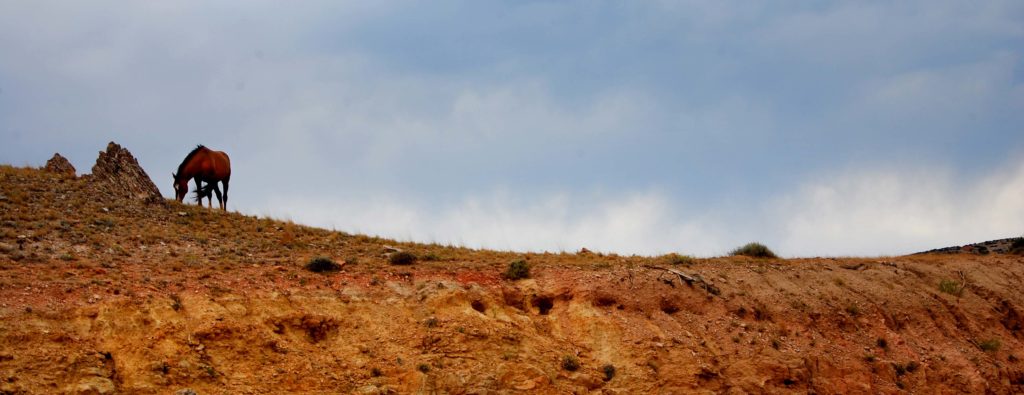
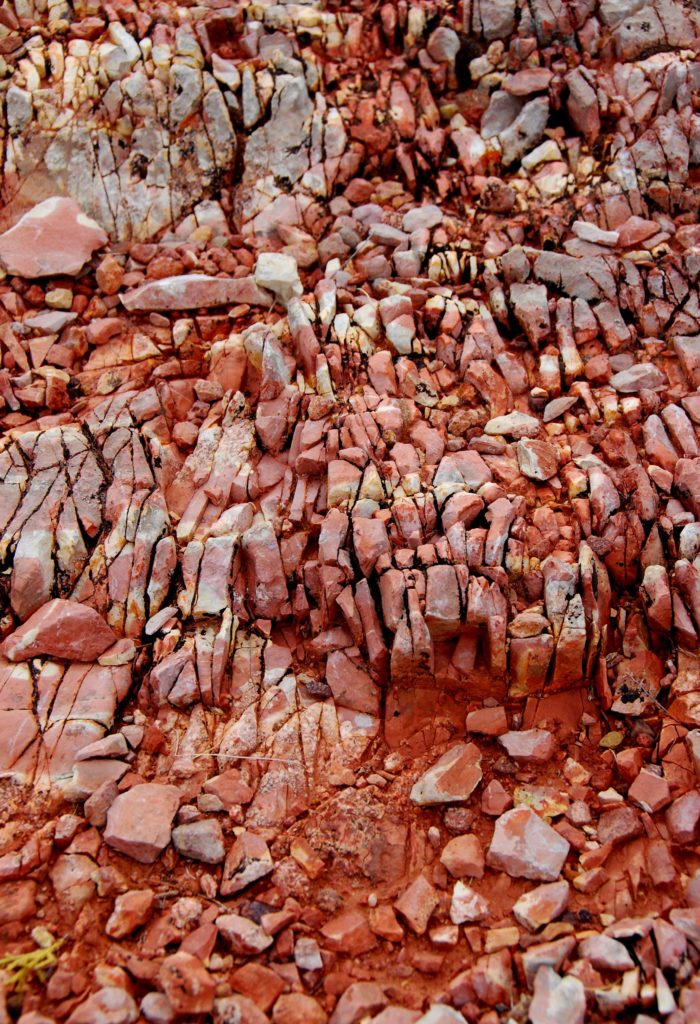
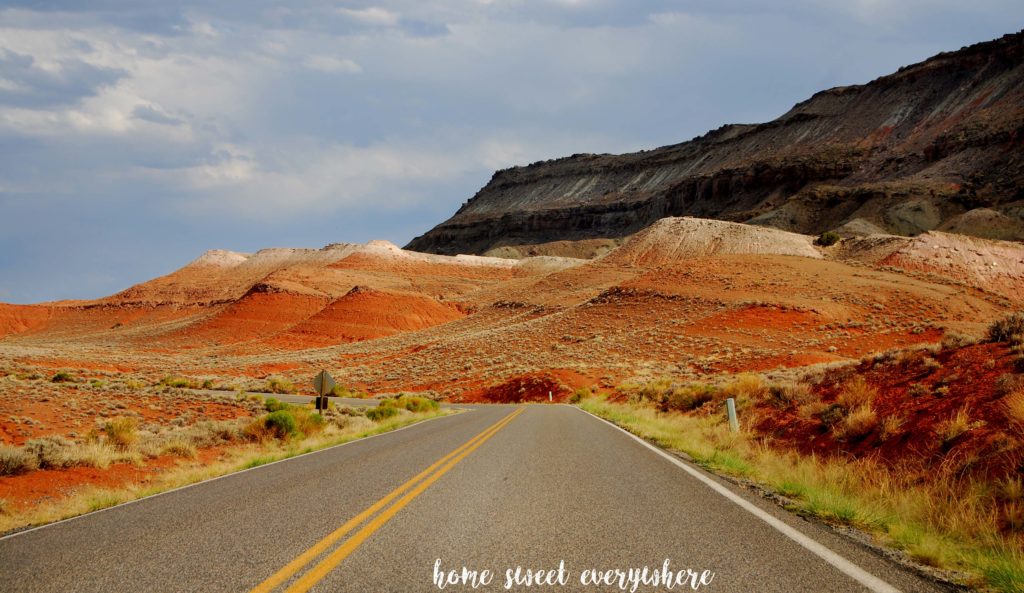
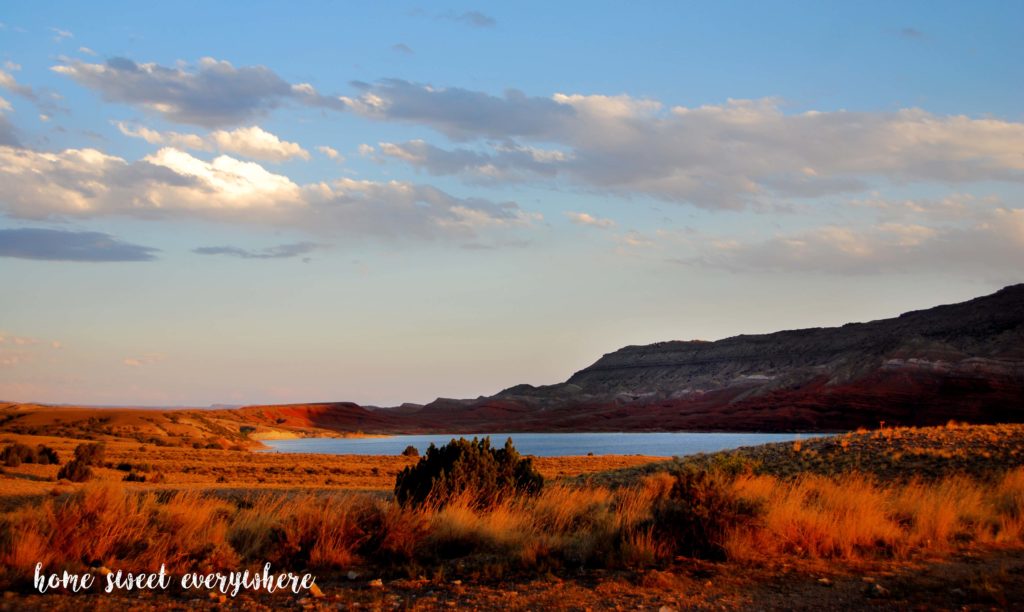
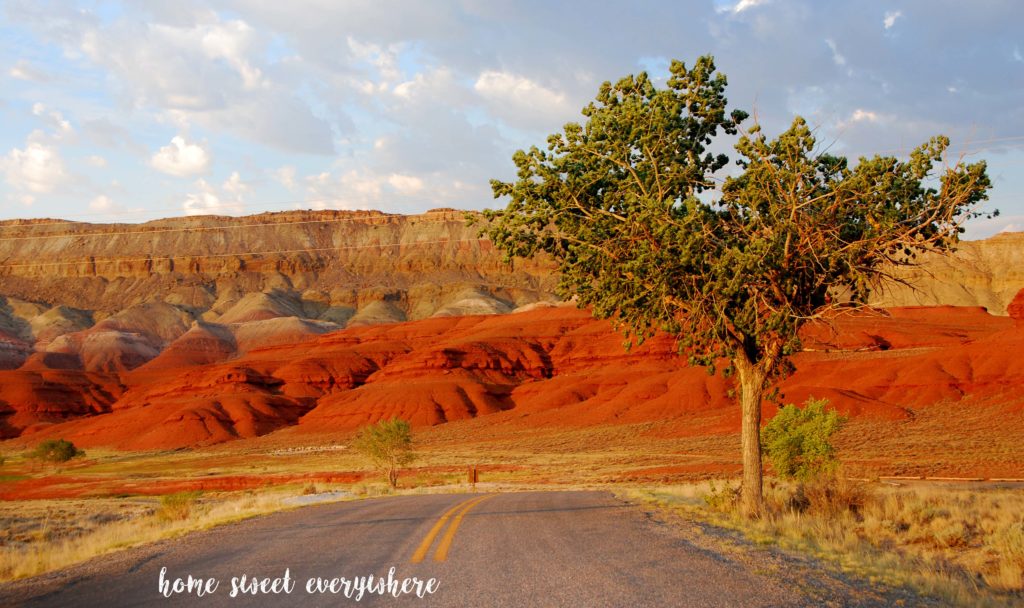
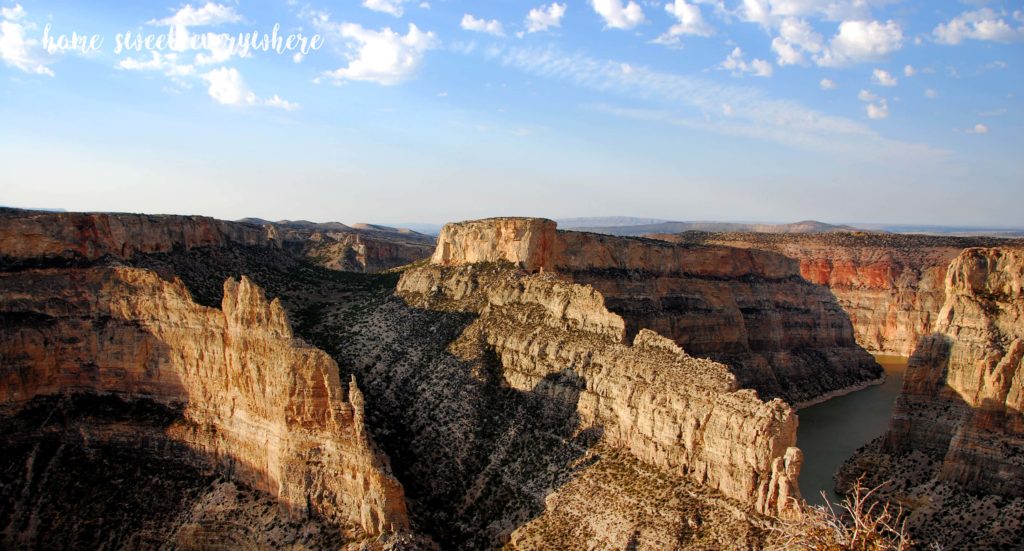
Bighorn Canyon Recreation Area sits on the border of Montana and Wyoming. As often happens on this continent, the scenery is quick to change as I drive into the park. Maroon earth shoots up from the ground, surrounded by multi-coloured buttes of beige, maroon and white. Tough green shrubs climb from the earth and seek out the sun. The roads curves and meanders a steady uphill. I’m forced to gasp in wonder at the serene, unspoilt beauty of this place.
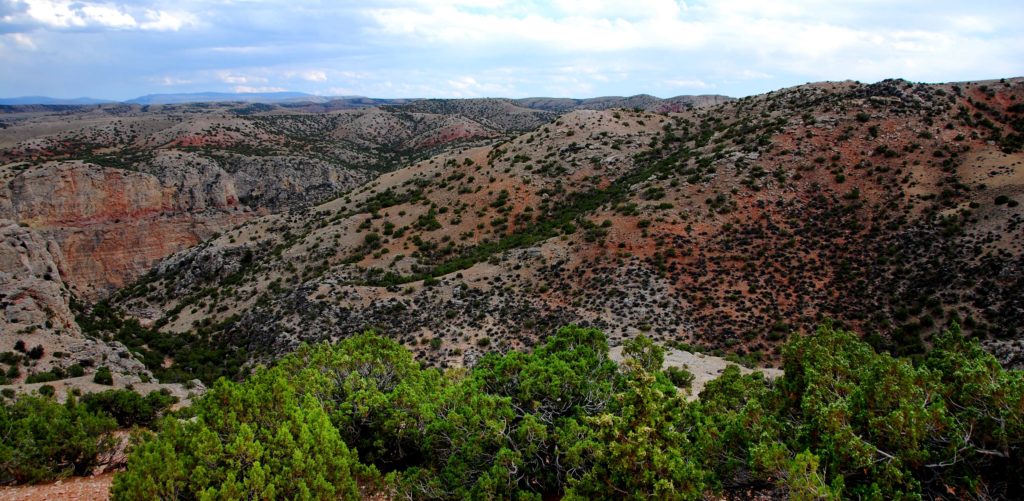
The canyon is deep, the water a dark turquoise in the reflecting sun. I stand above looking down into the canyon and over the top of it, into the far-reaching flatlands of Montana and Wyoming.
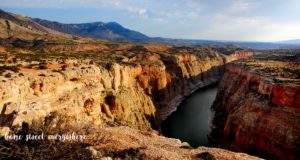
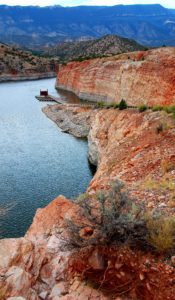 And I am the only one here. Unlike Yellowstone, tour buses don’t come here. I travel along the road, making stops to take photos without needing to worry about stopping traffic. Once in a while I pass a car, and at the main scenic lookout there are two other cars in the car park, but otherwise, the park is deserted. I walk some of the trails, and with nothing around but nature, I imagine what it must feel like to be the only person on Mars.
I am glad to be enjoying this without other tourists around, but also saddened that people are missing out on this. The views are just as amazing as at the Grand Canyon, it just doesn’t have the ‘Grand’ in the title. Isn’t ‘Bighorn’ more interesting though? Less pretentious?
The park is home to hundreds of tipi rings – rocks in a circle formation to denote where the tipi was set up. Seeing these rings, where real tipi villages used to be set up, not in a museum, but here in the wilderness, is extraordinary. This used to be a winter Crow camp. The current Crow Reservation is just across the canyon.
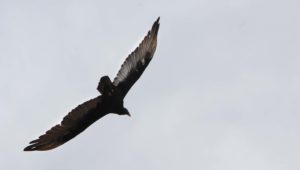
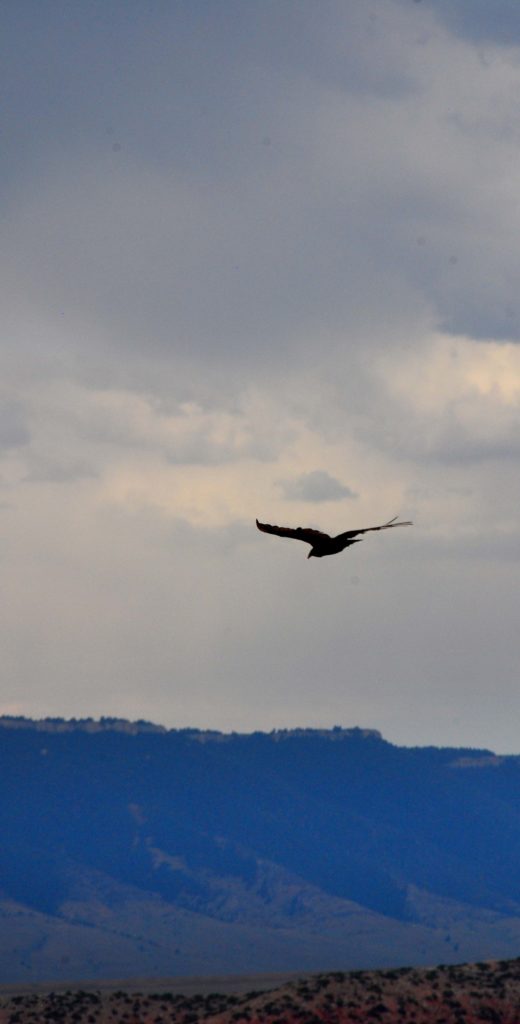
The canyon is also home to the raptor – a hunter whose head is huge and whose wing span is about 2 meters. I use my camera lens as a set of binoculars, but I don’t spot any. I do see many other birds, some of whom are circling above my head, getting a little too close for my comfort.
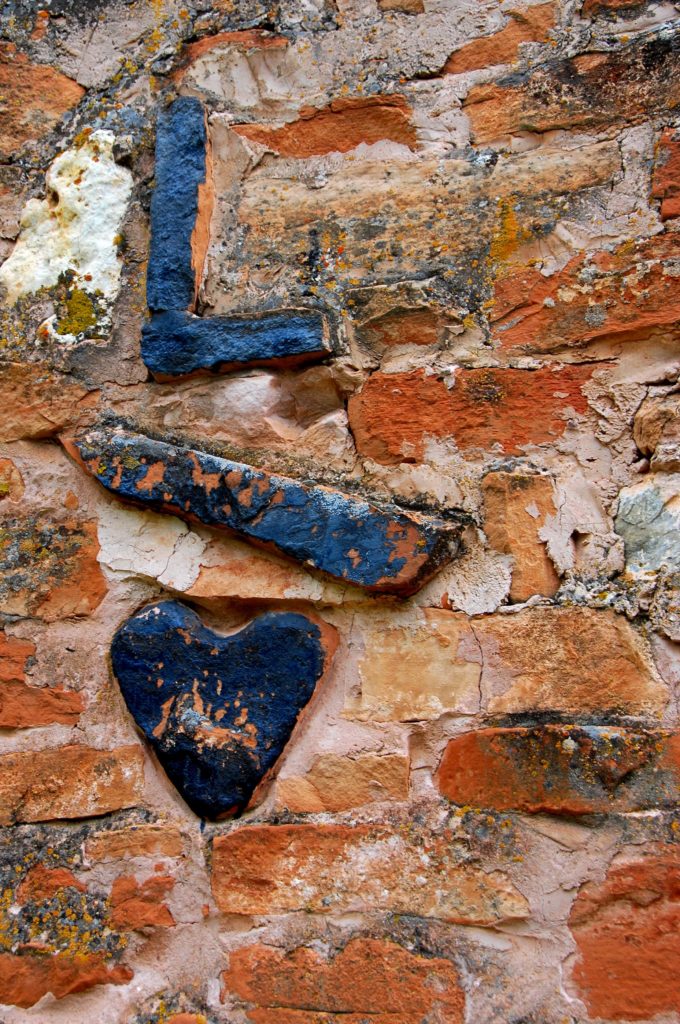
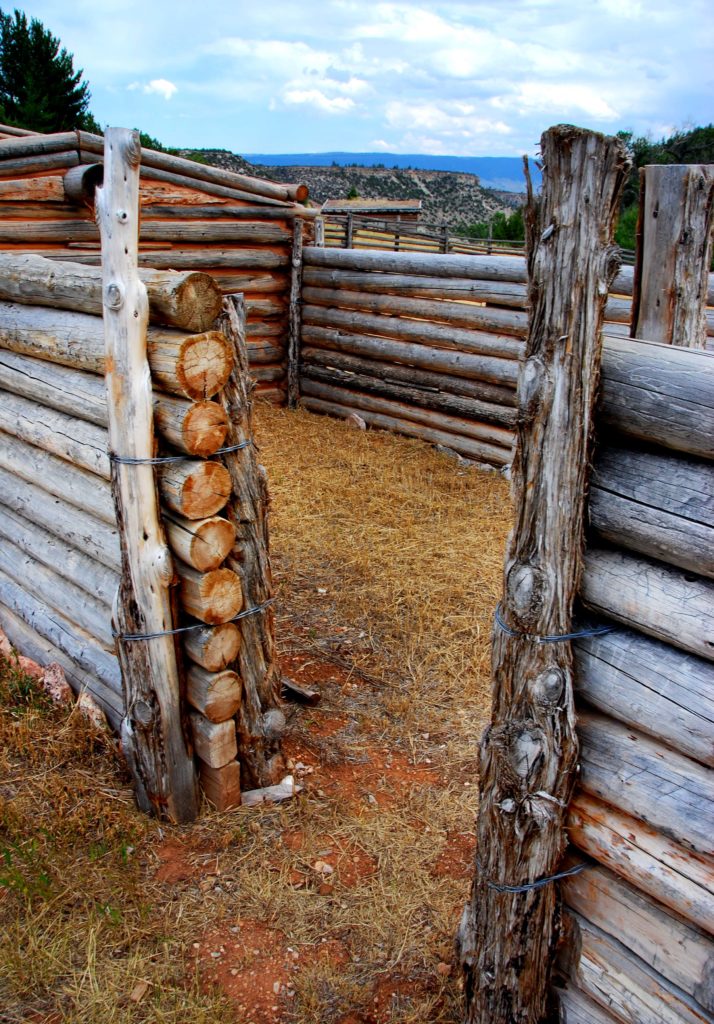
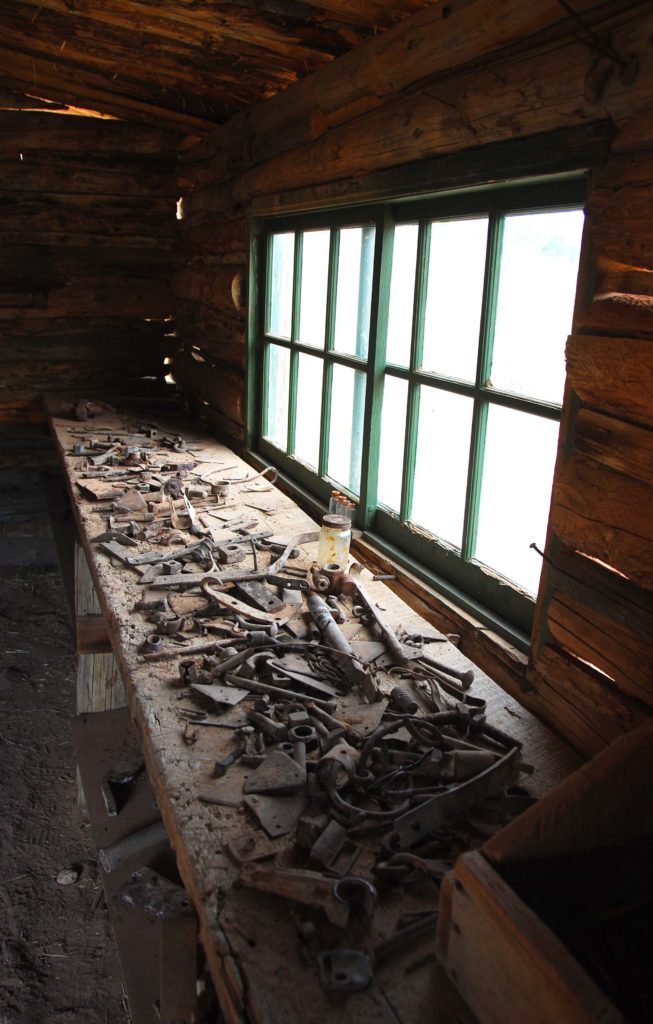
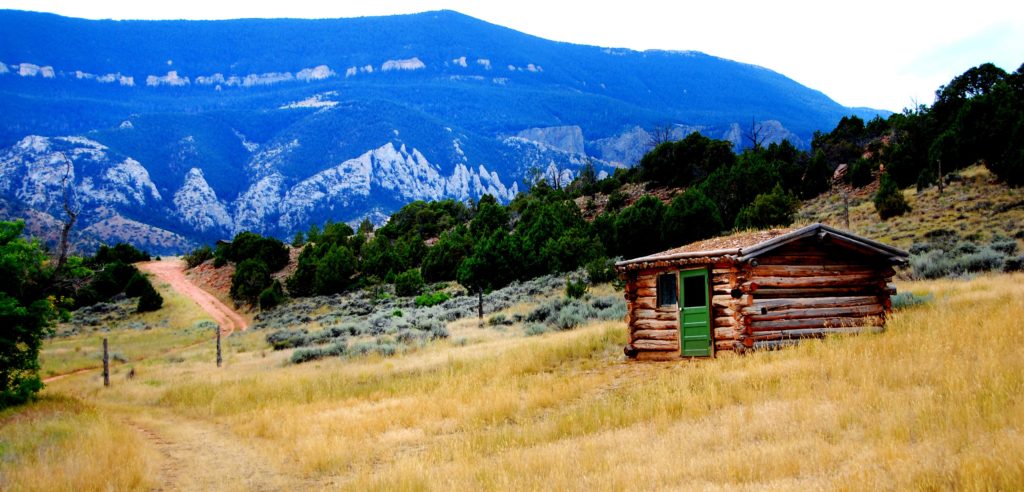
A part of what is now the park used to be owned by enterprising ranchers, one of whom was Caroline Lockhart. To get to the ranch I drive down a steep red-dirt road and take a short walk to the ranch. The buildings are all still here, their doors open. I find nothing inside but a few mouse traps, lots of dust and some tools. It’s cool to wander around this deserted place. And deserted it is, because there is no one else here. I don’t pass any cars along the dirt road to get here, and the walking path going to the ranch isn’t well worn. In the stables still hang a few horse harnesses and in the blacksmith shop lots of tools are strewn across the workbench, under a thick blanket of dust. It’s ghostly, eerie and wonderful. I feel like I may have just landed my Tardis in a forgotten land, wandering from cabin to cabin to stable to privy, looking for lost, trapped souls. I find a bench and sit, imagining what it would have been like when this was a working ranch, cattle herded into the corals, cowboys piling into their barracks after a hard day of manual labour. Louder. Smellier. Just as beautiful, maybe more so when it was full of life.
Why aren’t more people here?
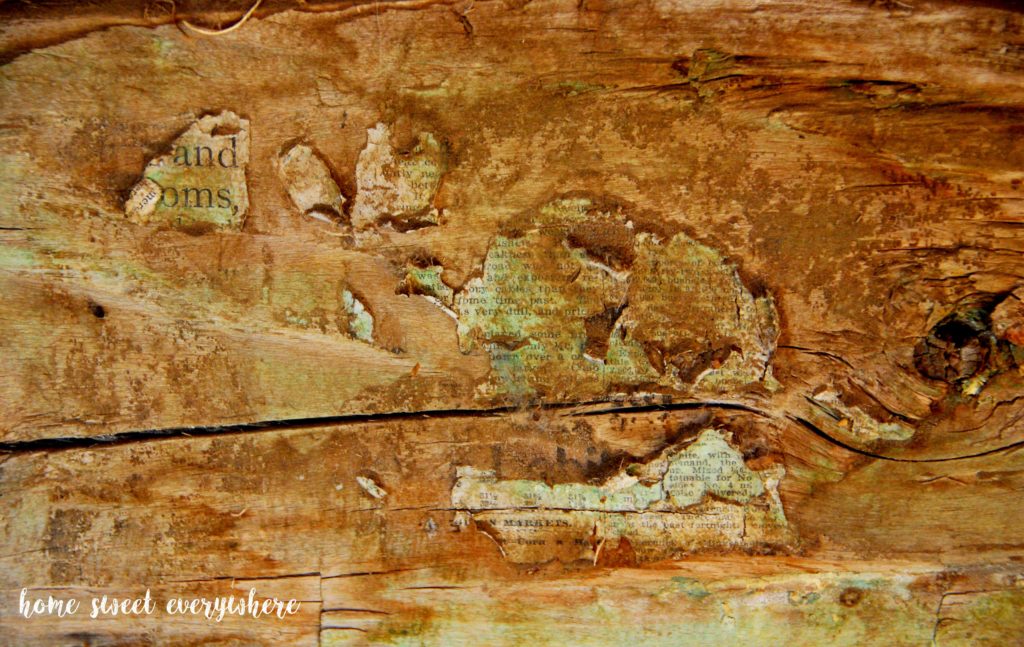
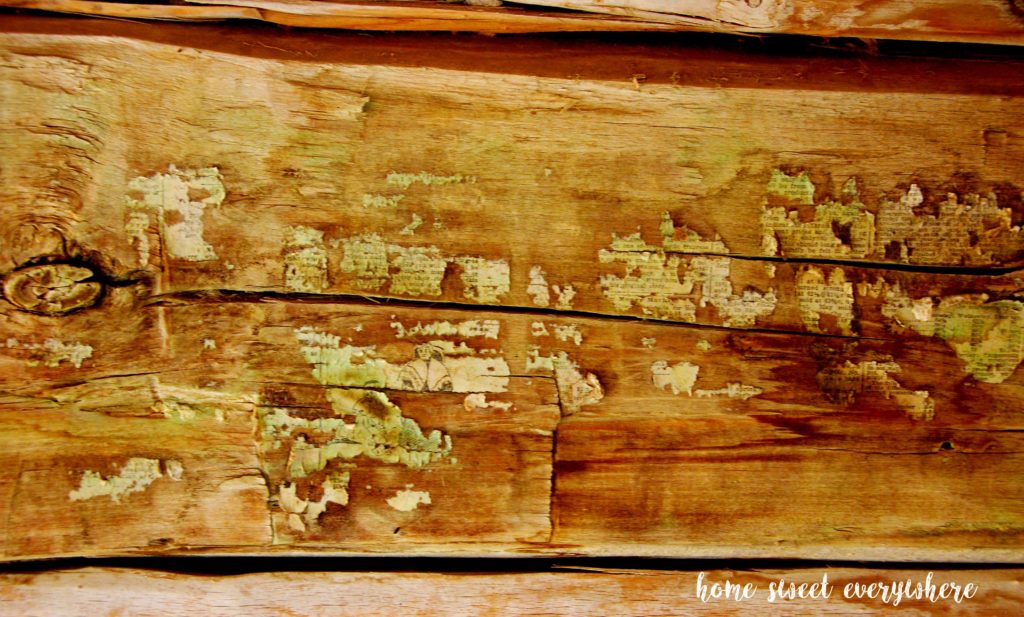
During my stay, I go to two other ranch sites and find the same thing – buildings with their doors open. In one there are still bits of newspaper clinging to a wall – I guess they used to patch the wall with newspaper to add a bit of insulation to the log-walls.
I arrive at the campground and find only 4 other occupied sites – big RVs. The wind is warm, but fierce. To set up my tent I have to first slide rocks into its four corners so that it does not fly away…if it flew, it would have a long way to go – the campground is on top of a ridge: to the east it’s flat, to the west there is a slight drop off and the Bighorn River. I try to use the car as a barrier, but the wind is unruly and the barrier does little to help. When I finally set up, the wind quickly turns my tent into a pancake, flattening it to the ground. It tries to get under the tent and lift it, but I have secured it with many heavy rocks. Already, one of the tent poles has been refashioned into curvy shapes. My 13 year old tent has finally been beaten by nature’s force.
If this wind continues through the night, I intend to sleep in the car.
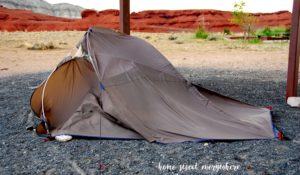
Making dinner is another adventure. My cooker, a Trangia, is supposed to be great in the wind (it says Wind Proof on it) and comes with it’s own, cleverly designed windshield. Well, the wind is so strong and unruly, I’m unable to predict it’s direction to best set up the windshield, and when I light the stove, the flame goes mad, trying to escape sideways, from above and below. The heat deforms the stove. The picnic table is scarred, too. My fingers are stung by the heat.
I’m hungry, though, and hungry for a hot, stodgy meal with beans, so I sit on the ground by the car, my body and the car creating the best shelter I can manage. Some chopped pieces of onion and pepper fly off my cutting board and the flame continues to be unpredictable, but the meal gets cooked. As soon as I extinguish the burning fuel, the wind plays it’s magic and my meal is quick to cool. I scoff it down. It’s satisfying enough. I call it a tie between the wind and I.
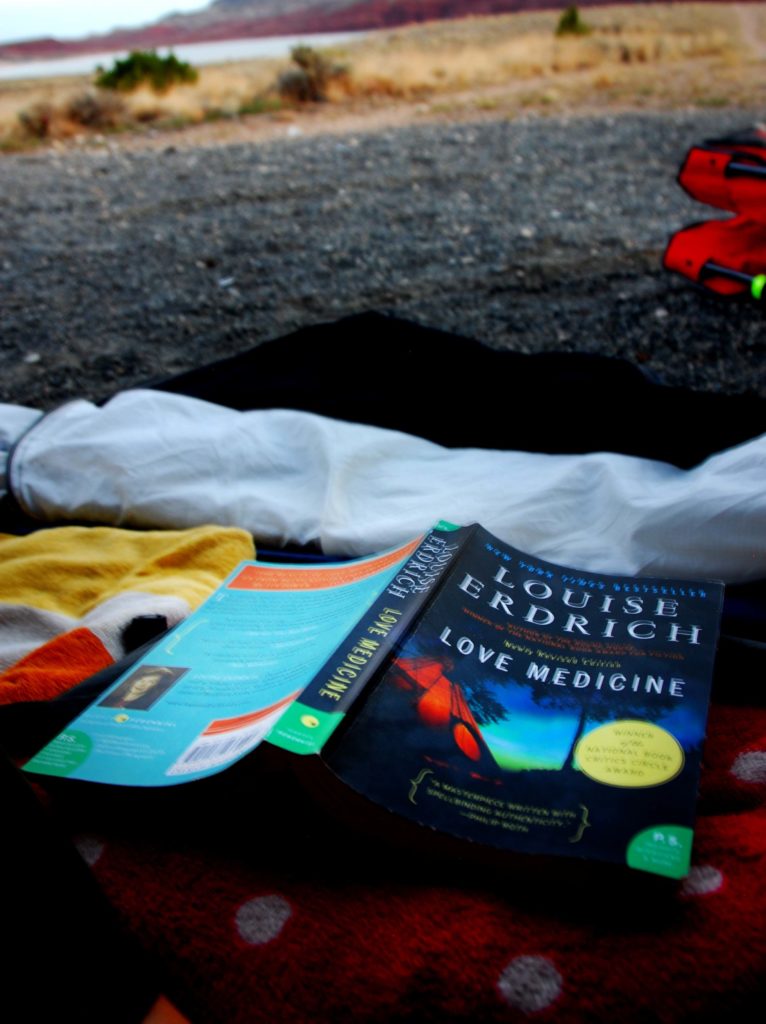
The wind tires a little at sunset. I open the tent door, slide in (the back of the tent is still occasionally being flattened) and read. I have a perfect view of the setting sun, it’s rays gently warming the ridge opposite the river, a last kiss before the night sets in. I can leave the tent open because there are no bugs out – I have the wind to thank for that.
As the sun sets, the wind dies. Suddenly, the air is still and hot. I change into lighter sleeping gear and fall asleep on top of my sleeping bag, wishing the wind came back to cool the air.
2 thoughts to “The Great ‘Bighorn Canyon’”