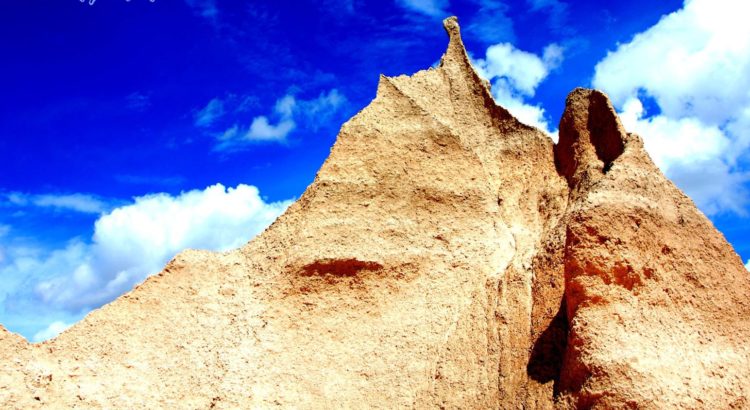
I can’t complain about the weather. Although there have been some storms, many of them have been timed perfectly – I’ve either been enjoying the slashing and tearing of the heavens from the safety of my car, or while I’ve been nestled into my cozy sleeping bag, my thirteen year-old tent doing a marvellous job of keeping me dry while I slumber. So when I arrive to the South Dakota Badlands I am confident that the storm I’m leaving behind at Custer State Park will not arrive before I find a campsite, pitch my tent and go gallivanting on some adventure in the Badlands National Park of South Dakota.
While paying for my entrance fee, I ask the Park Ranger how I can get to Sage Creek Campground – rustic, rugged and free. She peeks her head out of the booth window, scans the sky and my car.
“Does she drive on gravel?”
“Yes,” I answer and feel the need to add that she’s been tested on gravel and has been amazing.
The Park Ranger is not convinced because she begins to explain that to get to the Sage Creek I’ll need to drive along 13 miles of gravel road that is very tricky to navigate during and after the rain.
“The rain is coming,” she informs me pointing to the clouds.
Confident in my little, old car’s ability, I defiantly set off towards the campsite.
And drive into the rain, starting to imagine my car stuck in mud: the tread on my back tires is worn out.
Fifteen minutes later I speed, slightly, in the opposite direction, back towards the main Cedar Pass Campground.
The rain plays catchup. For a while I am in the lead, but then the road curves and the wind, not having to comply with the rules of the road, speeds ahead.
Eventually, the outer edge of the storm engulfs me. I get to the campground, dish out the cash for the site and begin to pitch my tent.
The wind is strong and the rain is coming sideways, although the main part of the storm hasn’t arrived yet. For some reason, I am filled with a sense of urgency and wounded pride, cursing myself that a little rain and mud frightened me into abandoning my adventure. I now have something to prove – I will successfully and independently set up my tent in the wind and rain.
A man at the next campsite has been roused from his tent, his tarp freed by the wind and flapping noisily. He untangles it, throws it in his car and offers his help. I kindly decline, stupidly, because I can’t hold my tent down long enough to put the poles in, nor are there any rocks to help. The tent is getting wet.
“Actually, I would love your help,” I shout as the man is about to crawl into the safety of his dry tent. Our introduction is a quick shout over the storm. I catch his name – Ben.
Together we fight the wind and pitch the tent. The wind is stronger now, the poles unable to withstand the wind, flattening the tent to the ground. We’re both soaked, but we manage to put the waterproof fly on and I suspect the tent’s mostly dry inside. Ben, now soaked, retreats back to his tent, leaving me with a hammer – the ground is hard and rockless I need the hammer to help lodge the pegs into the ground.
Soaked, I get into the car and drive to Wall Drug Store. For the past several hundred kilometres I have been inundated with billboards and placards inviting me to visit; it’s raining, I think, so why not go and explore a general store and dry off a little?
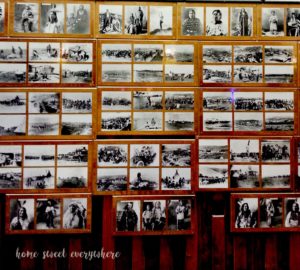
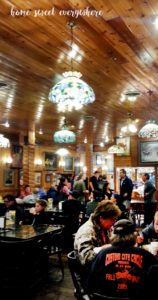
Wall Drug is a maze, a collection of nooks and crannies divided by corridors whose walls are full of newspaper clippings, a Zoltar Fortune Telling Machine like the one from Big, a kid’s shooting range and a saloon. I have to have my wits about me, drawing a mental map because with the other tourists, the kitsch, the many shop assistants, the colours, the noise and the havoc it is easy to get lost. I zig and zag, from the souvenirs to the Cowboy boots, from the jewellery to the toys, from the fishing gear to the books and freshly fried donuts. Then, I find a map.
Wall Drug’s a perfect tourist trap, and the tourists are willing: it is easy to buy into the amusement park feel of the place.
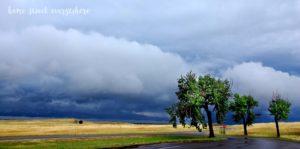
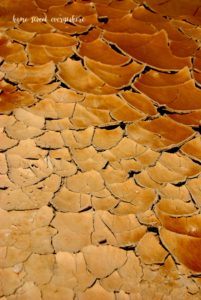
I drive back along the Highway 240 Loop Road, treated to beautiful scenes of the storm as it makes its way East and away from the Badlands. To avoid going back to my tent, afraid to see it in ruin, I stop at all the scenic points. I attempt walking a little, but my hiking boots don’t do well in the slippery clay-mud. Suddenly, I am glad that I did not drive to the remote campsite; I would have lost the battle against this slick muck.
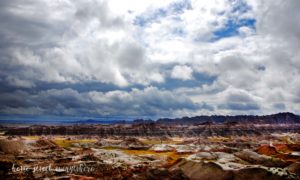
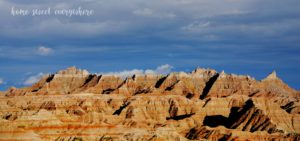
The sun settles; the sky is kissed goodnight and blushes.
All the clouds are gone.
I return to camp and apologize for making my fellow camper get wet because of my impatience. I blame it on the fact that I’ve spent seven years living in England where, once rain set in, its energy took more than a few hours to be spent. I’m glad to have beer in the boot of the car – we toast the storm.
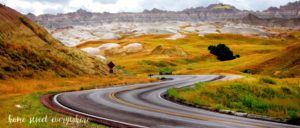
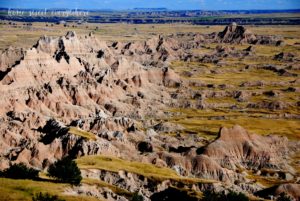
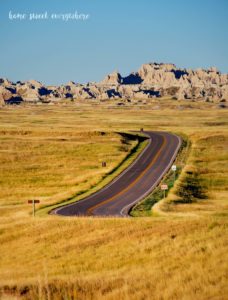
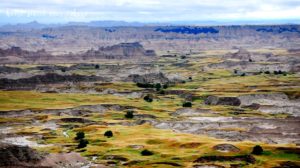
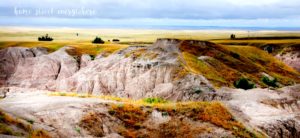
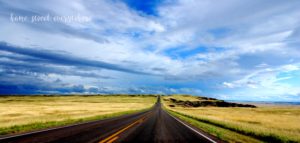
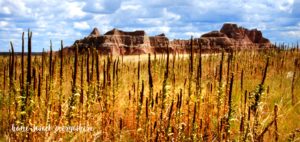
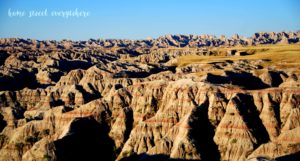
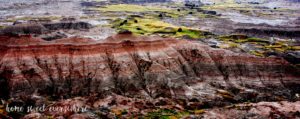
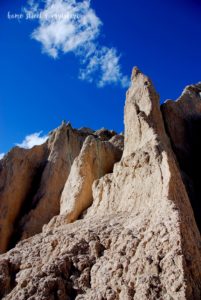
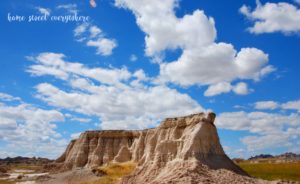
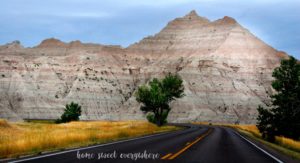
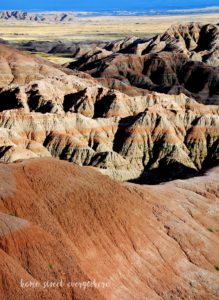
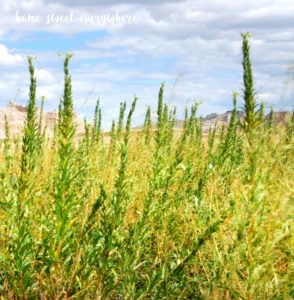
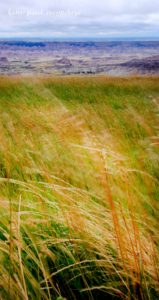
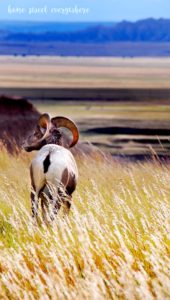
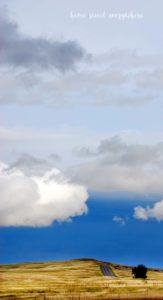
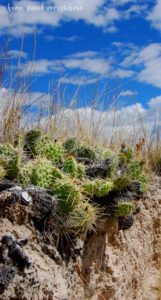
The next day the Badlands, under a blue sky, look like they’ve been sprinkled in gold dust. I walk most of the trails in the park, my legs finding long distances easy after their daily practise; the walking here is mostly flat, with very few steep climbs.
I spend my last night in the Badlands at the amphitheatre where an astronomer uses his laser to point out various constellations, weaving comedic stories about stars, gods and the universe. We watch as the solar panels of two satellites catch the sunlight and glimmer, for a few seconds, as they fly above us, then fade away. I get an amazing look at Saturn through an expensive telescope – it’s marvellous to see Saturn’s rings. I love feeling smaller than a spec of dust, but one that is a part of the universe nonetheless.
The astronomer ends the talk by pointing to the Milky Way and exclaiming,“You’re a part of it! You’re standing in the Milky Way. You’re in it.”