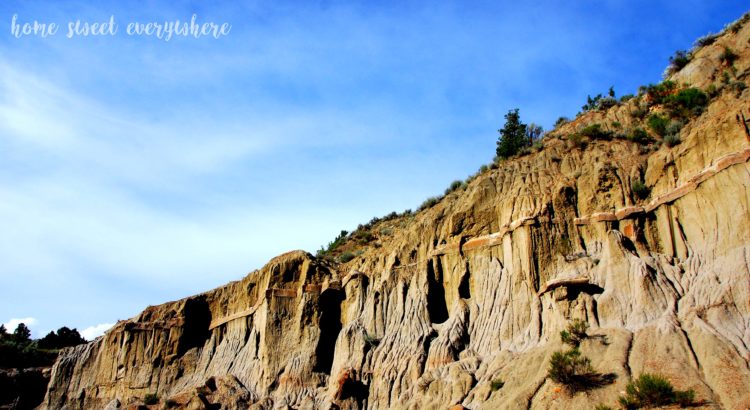
Theodore Roosevelt National Park sits on the western edge of North Dakota and is divided into the South and North Unit; they are about 100 km apart, between them a designated wilderness area. I first visit the North Unit – it is more remote and less frequented by visitors; the South Unit sits on the Interstate, it’s park entrance is in Medora, thus it gets many more visitors.
The North Unit is home to the Juniper Campground – first come first serve. The Park Ranger alerts me to the strong winds and stormy weather, encouraging me to set up camp quickly. The winds are strong, but in return there is not one biting bug around, and I can give my flapping arms a rest and keep the insect repellent off my clothes and body.
I have no trouble finding a campground – I have my pick of them, in fact. The other campers are mostly lounging in their RVs, and there aren’t many of them. They’ve travelled here from everywhere but North Dakota.
Like many National Parks in the States, the facilities are simple – restrooms and drinking water are the only amenities. But this doesn’t matter – the campsites are big, spread out, well maintained and the outer campgrounds blend into the rest of the park – it is easy to find bison footprints. The park is home to many trails, short loops and longer, challenging hikes and a scenic drive – all this for $14.00/night plus a $20.00 park permit that allows you entry into the North and South Unit for a week.
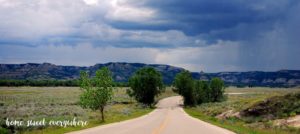
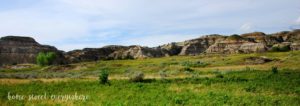
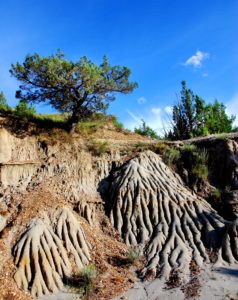
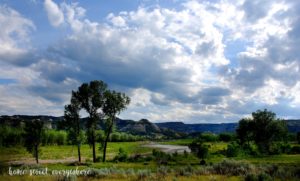
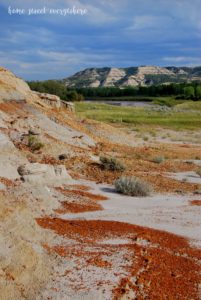
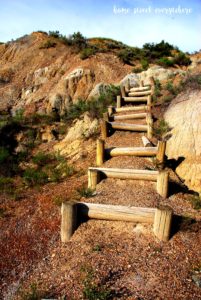
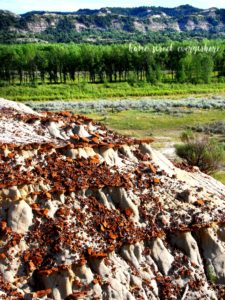
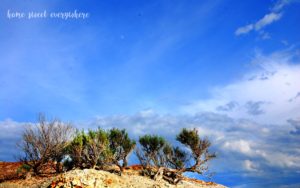
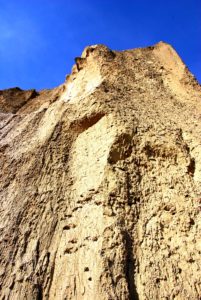
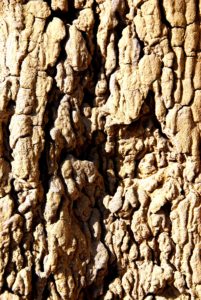
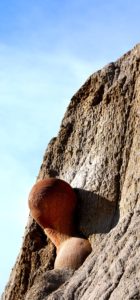
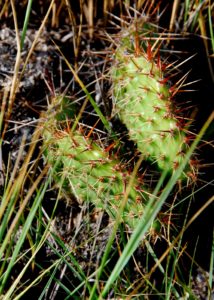
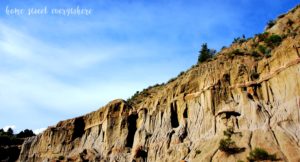
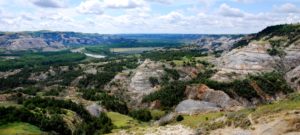
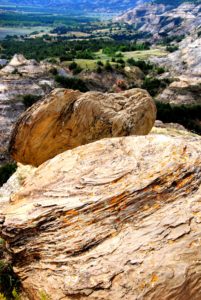
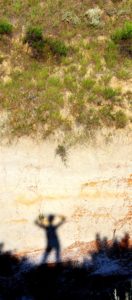
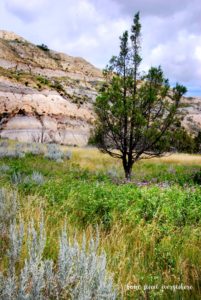
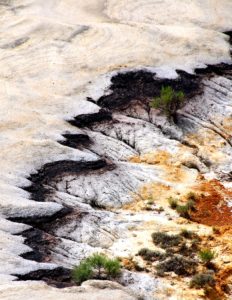
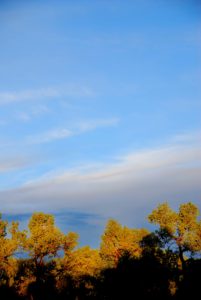
I camp for two nights and keep busy during the days. There is a windy 18 mile scenic drive (one way) through the park, along which are various trailheads, short loop walks and scenic outlooks. I pack a lunch, head off early, and spend much of the day driving and hiking. I don’t meet other hikers on the trails – it is hot, and many of them are here to enjoy the drive. As I hike, I feel that I am the only person on earth, an explorer and adventurer, like Lewis and Clark, or even Theodore Roosevelt who himself came here and fell in love with the land. I understand the allure the early settlers must have had for the land. The rolling hills, tress, clumps of silver sagebush and multi-coloured buttes make one feel small and remote, but at the same time large and strong, drawn to the massiveness, feeling apart of it and seeing nothing but opportunity.
I am reading John William’s Butcher’s Crossing, and Williams describes the pull of the wilderness experienced by the main character, Will Andrews: Andrews “believe[s] that there [is] a subtle magnetism in nature, which, if he unconsciously yielded to it, would direct him aright, not indifferent to the way he walked. […] nature had been so purely presented to him that its power of compulsion was sufficiently strong to strike through his will, his habit, and his idea. […] he walked past the clump of cottonwoods towards the river he had not seen, but which had assumed in his mind the proportions of a vast boundary that lay between himself and the wildness and freedom that his instinct sought.” (48)
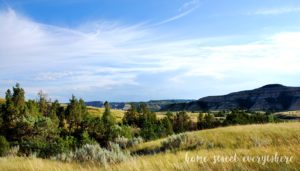
There is also a passage the beautifully describes the grass: “The rich buffalo grass […] changed its colour throughout the day; in the morning, in the pinkish rays of the early sun, it was nearly gray; later, in the yellow light of the midmorning sun, it was a brilliant green; at noon it took on a bluish cast; in the afternoon, in the intensity of the sun, at a distance, the blades lost their individual character and through the green showed ta distinct cast of yellow, so that when a light breeze whipped across, a living colour seemed to run through the grass, to disappear and reappears from moment to moment. In the evening after the sun had gone down, the grass took on a purplish hue as if it absorbed all the light from the sky and would not give it back.” (77)
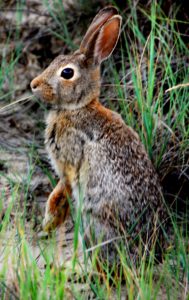
The park is not silent. During the day I hear the constant chirping of birds – the park is host to 197 bird species, many of them songbirds. At dusk, crickets and cicadas begin their symphony, and if the wind happens to die down, you hear the occasional buzz of mosquitoes. There is abundant wildlife to be to seen too – snakes, coyotes, wild horses, rabbits, prairie dogs and bison – these are the animals I spot.
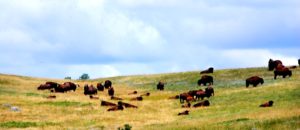
Bison and humans share the trails and roads here, so often on my walks I am stepping around bison footprints, some of them very fresh. I don’t spot any bison during my hikes (it is the middle of the day and they are probably napping somewhere in the shade) but I see many of them during my morning drives, grazing, or very slowly walking along the road, fanning around my car that sits there, engine off, in the middle of the road.
Theodore Roosevelt was the president that first established National Parks, and everywhere you go in the park, you are confronted by quote or a photo of Roosevelt as a young man during his time here.
As a young man, Roosevelt came out to western North Dakota after the death of his mother and his first wife, fell in love with the place and bought two ranches, working the land himself. The ranches were not successful, however, according to the park’s information bulletins, North Dakota was special to Roosevelt, and his is known to have reminisced about his experiences here.
“This is where the romance of my life began.” Theodore Roosevelt
“I have always said I would not have been President had it not been for my experience in North Dakota.” Theodore Roosevelt
———-
Williams, John. (1960) Butcher’s Crossing. New York: New York Review Books, Classics.